

What Is Predictive Maintenance for Commercial Lighting Systems? Benefits and…
Predictive maintenance for lighting systems uses equipment history, performance trends, and operating conditions to predict where…

This blog was originally published November 7, 2019, and has been updated November 10, 2026.
Electrical fire prevention in the workplace starts with recognizing unsafe conditions and correcting them before they threaten employees, customers, and operations. Overloaded circuits, damaged wiring, and overheating equipment can develop into serious hazards when warning signs go unreported.
Commercial electrical fire prevention is a systematic facility management process involving routine visual inspections, preventive maintenance, load management, and compliance with applicable OSHA regulations and electrical codes, informed by NFPA standards, to prevent electrical faults from causing ignition.
According to the National Fire Protection Association’s Non-Home Electrical Fires report, wiring and related equipment accounted for 60% of non-home fires involving electrical distribution and lighting equipment during 2012–2016. This historical benchmark highlights the importance of maintaining electrical infrastructure.
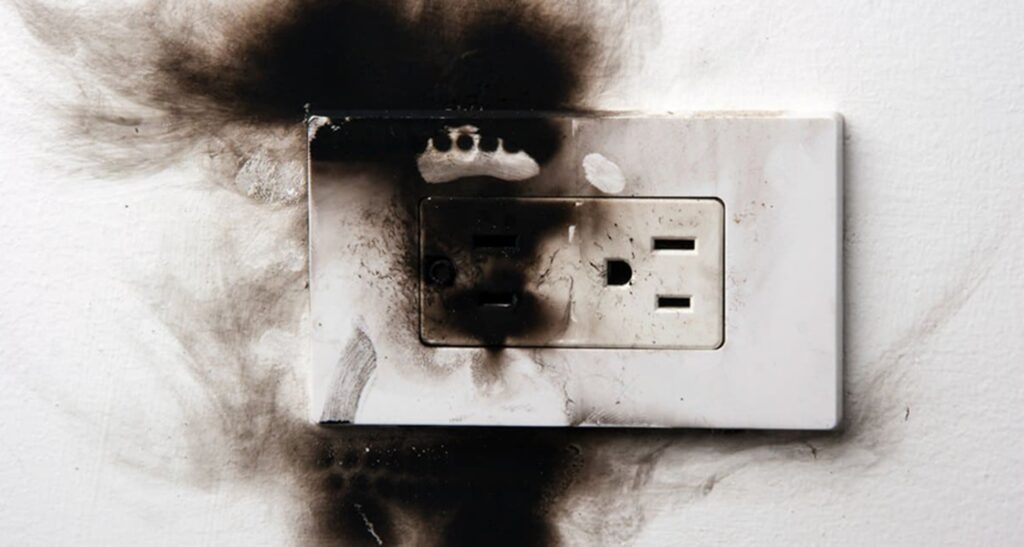
Common workplace electrical fire hazards include overloaded circuits, damaged wiring, faulty outlets, overheating equipment, improper extension cord use, and electrical panel defects. These conditions can generate heat or arcing that ignites insulation or nearby combustible materials.
| Hazard | Recognizable warning signs | Recommended response |
| Overloaded circuits | Breakers trip when equipment operates or after devices are added | Have an electrician evaluate connected loads and circuit capacity |
| Damaged wiring | Frayed insulation, crushed cords, exposed conductors, or rodent damage | Stop using affected equipment safely and arrange evaluation |
| Faulty outlets or switches | Loose-fitting plugs, discoloration, buzzing, or melted components | Stop using the affected outlet or switch and request electrical service |
| Overheating equipment | Burning odors, blocked ventilation, unusual shutdowns, or heat damage | Follow safe shutdown procedures and arrange service |
| Improper cord use | Damaged plugs, pinched cords, connected power strips, or permanent reliance on extension cords | Correct unsafe arrangements and evaluate permanent power needs |
| Electrical panel issues | Corrosion, water intrusion, missing covers, unusual noise, or repeated trips | Keep people clear of suspected hazards and contact a qualified electrician |
Repeated breaker trips do not always indicate an overload. Short circuits, ground faults, and defective equipment can also trigger protective devices. Never repeatedly reset a breaker without confirming the circuit can operate safely.
Wiring age alone does not determine safety. Installation quality, physical condition, environmental exposure, and previous modifications also matter. Loose connections can overheat even when a circuit is not overloaded.

Warning signs include unusual odors, visible damage, abnormal sounds, and excessive heat. These observations warrant attention, but employees should not attempt to diagnose the cause themselves.
Businesses can reduce electrical fire risks through routine observations, safe equipment use, documented reporting, and professional maintenance.
During facility walkthroughs, check accessible cords, plugs, outlet covers, equipment housings, and electrical room conditions. Keep required electrical working spaces clear of storage and maintain equipment ventilation and manufacturer-specified clearances.
Give employees a simple reporting process that records the location, affected equipment, symptoms, and circumstances. Remove suspected defective equipment from service safely, and prevent reuse until it is appropriately evaluated.
Use equipment within its ratings and installation instructions. Avoid connecting power strips or placing cords where carpets, doors, or furniture can conceal or damage them. Extension cords generally cannot replace fixed building wiring. Another outlet may share the same circuit, so relocating a device does not necessarily resolve an overload.
Protect Your Workplace with Proactive Electrical Safety and Reliable Emergency Support
Identifying electrical fire hazards before they become serious problems is essential for maintaining a safe and reliable commercial facility. From overloaded circuits and damaged wiring to overheating equipment and outdated electrical systems, recognizing warning signs and addressing potential hazards early can help reduce fire risks, prevent costly disruptions, and protect employees, customers, and property. However, even with proactive maintenance and preventive measures, unexpected electrical emergencies can still occur.
Explore our blog on emergency electrical services to learn more about the types of electrical issues that require immediate attention and why having a reliable electrical service partner is essential for commercial facilities. Then, connect with Action Services Group’s electrical experts to discuss your facility’s electrical maintenance needs, potential safety concerns, and strategies for reducing risks while maintaining safe, dependable operations across your locations.
👉 Read: Emergency Electrical Services – No Laughing Matter (Except for the Last One)
Qualified electrical personnel should determine appropriate inspections, testing, cleaning, repairs, and load assessments. Thermographic infrared inspections may help identify abnormal heating when appropriate for the equipment and performed under safe procedures.
For regional or national footprints, partnering with a nationwide electrical services provider like Action Services Group helps standardize hazard reporting and coordinate preventive maintenance across locations. Each facility’s scope should reflect its equipment, operating conditions, and applicable requirements.
Set maintenance intervals using manufacturer instructions, equipment condition, environmental exposure, service history, and applicable standards. Dust, moisture, heavy use, or recurring failures may require closer attention.
A qualified electrician should evaluate repeated breaker trips, persistent unexplained flickering, buzzing outlets, heat damage, suspected concealed wiring damage, and panel deterioration.
Arrange assessments after water intrusion, rodent damage, renovations, or major equipment additions that may affect electrical systems.
Employees should not remove panel covers, tighten electrical connections, or install larger breakers to stop tripping. Electrical work requires appropriate qualifications, de-energization, and lockout/tagout where required.
OSHA establishes enforceable workplace safety requirements. NFPA documents address installation, maintenance, and electrical work practices, while state and local adoption determines applicable electrical code requirements.
| Framework | Primary purpose |
| OSHA electrical regulations | Equipment safety, wiring methods, working space, and employee work practices |
| NFPA 70, National Electrical Code | Electrical installation requirements under the locally adopted edition and amendments |
| NFPA 70B | Electrical equipment maintenance programs, inspections, and testing |
| NFPA 70E | Safe work practices that protect employees from electrical hazards |
| State and local requirements | Jurisdiction-specific codes, permits, and inspections |
NFPA standards are not automatically identical to federal regulations. They may become binding through adoption, incorporation, or contractual requirements.
OSHA generally requires visual checks of portable cord-connected equipment and extension cords before use each shift, except for equipment that remains connected and is protected from damage until relocated. This does not create a single inspection schedule for an entire building’s electrical system.
Reduce Electrical Fire Risks with Proactive Commercial Electrical Services
Preventing electrical fires starts with identifying potential hazards, maintaining electrical systems, and addressing issues before they escalate into costly emergencies. From aging wiring and overloaded circuits to faulty equipment and inadequate maintenance, electrical hazards can threaten workplace safety, disrupt operations, and create significant financial liabilities. Partnering with an experienced commercial electrical service provider can help businesses proactively address these risks while maintaining safe, reliable, and efficient electrical systems across their facilities.
Explore Action Services Group’s Electrical Services to learn how our nationwide network of qualified electrical professionals supports commercial facilities with preventive maintenance, electrical repairs, troubleshooting, and electrical projects. Whether you manage a single commercial property or hundreds of locations nationwide, our team can help you develop a proactive electrical maintenance strategy, address potential safety concerns, and minimize unexpected downtime. Schedule a call with our electrical experts to discuss your facility’s needs and discover how we can support your long-term electrical safety and operational goals.
Do surge protectors prevent every electrical fire?
No. Surge protectors do not correct damaged wiring, loose connections, or inadequate circuit capacity.
What should businesses document after an electrical repair?
Record the diagnosis, affected equipment or circuit, corrective work, testing results, and outstanding recommendations. These records help identify recurring problems.
Who handles electrical hazards in leased commercial space?
Responsibilities depend on lease terms and applicable requirements. Establish reporting and repair responsibilities in advance without delaying immediate protective action.
Proactive electrical maintenance, employee awareness, and professional inspections help businesses identify developing hazards and reduce electrical fire risks.
Action Services Group provides nationwide electrical services, including preventive maintenance, troubleshooting, and repairs for commercial facilities and multi-site businesses. Schedule a call with our team to discuss your electrical service needs and plan maintenance around your facilities’ operating requirements.

Predictive maintenance for lighting systems uses equipment history, performance trends, and operating conditions to predict where…

When retrofitting your LEDs, lightbulbs have various illuminance. Theres different ways to measure the lighting of…

Understanding light measurements, luminance and foot-candle can help when choosing the perfect bulb for you next…
Predictive maintenance for lighting systems uses equipment history, performance trends, and operating conditions to predict where failures are likely and…
When retrofitting your LEDs, lightbulbs have various illuminance. Theres different ways to measure the lighting of your next retrofit.
Understanding light measurements, luminance and foot-candle can help when choosing the perfect bulb for you next retrofit.