

Lighting Measurements – An In-depth Guide Part 1
When retrofitting your LEDs, lightbulbs have various illuminance. Theres different ways to measure the lighting of…

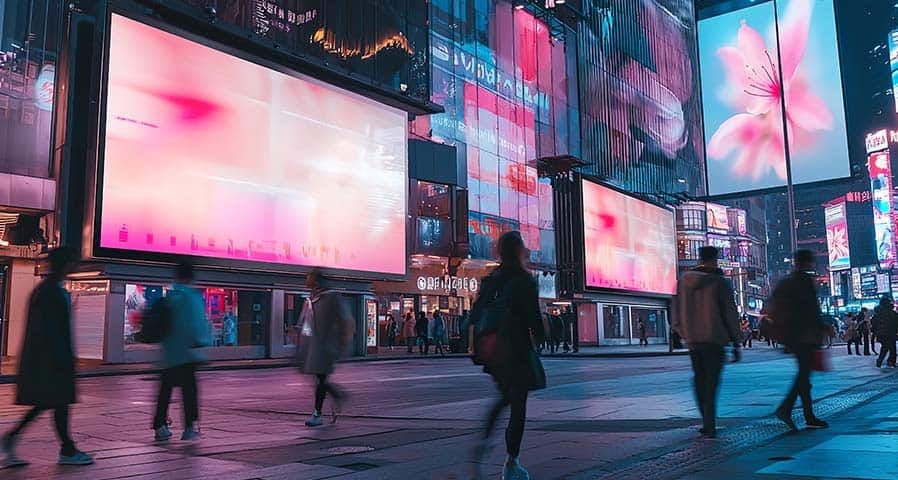
Commercial facilities are increasingly using LED signage as an operational communication tool that supports real-time messaging, customer engagement, and regulatory alignment across physical environments.
What LED Signage trends are shaping commercial business communication in 2026 and beyond?
The trends in LED signage are changing how businesses communicate with customers in physical environments. As display technology advances and customer expectations shift toward faster, clearer communication, commercial LED displays continue to play a critical role in brand visibility, engagement, and trust. In 2026 and beyond, organizations are prioritizing efficiency, adaptability, and measurable performance through Smart LED signage rather than relying on traditional static signage.
From retail storefronts and office lobbies to transportation corridors and highway advertising, LED signage is evolving into an intelligent business communication platform that aligns with modern marketing strategies.
Smart LED signage is emerging as one of the most important commercial display trends in 2026 because commercial facilities are moving beyond static messaging toward responsive, data-driven communication systems. Businesses now require LED signage that can adapt to customer behavior, support operational updates, and maintain messaging consistency across multiple locations without requiring manual intervention.
Traditional LED signage typically functions as a fixed display that requires physical updates or on-site programming to change content. Smart LED signage integrates with cloud-based software platforms that allow facility teams and marketing departments to manage LED displays dynamically from a centralized interface. Commercial organizations can schedule promotional messaging, update announcements across multiple locations, and automatically adjust brightness levels based on environmental lighting conditions.
| Feature | Static / Traditional Display | Smart LED Platform (2026) |
| Content Updates | Manual / Physical Replacement | Remote / Instant Cloud Sync |
| Brightness Control | Fixed / Manual | Auto-Dimming via Sensors |
| Compliance | Manual Monitoring | Automated Regulatory Presets |
| Analytics | None (Estimated Performance) | Real-time Dwell Time & ROI Data |
Smart LED signage platforms improve content management by enabling:
This level of automation allows commercial facilities to reduce manual content updates, respond quickly to promotions or operational announcements, maintain messaging consistency across locations, and improve overall operational efficiency.
As commercial facilities increasingly rely on digital communication to support tenant engagement, customer navigation, and safety messaging, Smart LED signage is evolving into an operational tool rather than a standalone marketing display.
Smart LED signage platforms allow business owners to manage display content remotely through integrated software systems. Marketing teams can schedule promotional messaging, update announcements across multiple locations, and automatically adjust brightness levels based on ambient lighting conditions.
Smart LED signage helps organizations:

Outdoor LED displays are supporting more localized advertising strategies through dynamic messaging capabilities. Businesses can rotate promotional content based on traffic patterns, time of day, or nearby events to ensure messaging remains relevant to changing audience conditions.
Modern LED signage now supports:
These capabilities improve audience relevance while reducing wasted impressions.
Modern LED displays consume significantly less power while maintaining high brightness levels across commercial environments. Improved thermal management systems also extend display lifespan, reducing both energy consumption and long-term maintenance requirements.
Energy-efficient LED signage:
Energy efficiency remains a foundational driver behind LED signage adoption across commercial environments.
One of the most significant developments in LED displays is the shift toward smaller pixel pitch technology. Higher resolution LED signage allows businesses to present detailed text, motion graphics, and promotional content clearly, even at close viewing distances.
This capability is particularly valuable for:
Improved visual clarity enhances message recall and reduces viewer fatigue.
Commercial LED signage in 2026 emphasizes modular design. LED display panels can be expanded, resized, or reconfigured as business needs evolve.
Modular LED signage solutions are ideal for:
This flexibility supports future expansion without requiring full system replacement.
Businesses are increasingly connecting LED displays to analytics platforms that measure dwell time, engagement patterns, and conversion rates. This data-driven approach allows organizations to align LED signage content with measurable marketing goals rather than relying on guesswork.
LED signage now functions as part of a broader brand ecosystem. Integration with websites, mobile platforms, and social media channels improves consistency across customer touchpoints.
Examples include:
This integration improves both trust and brand recognition.
Still relying on static signage that’s difficult to update or manage across your locations?
Digital signage allows organizations to deliver dynamic, real-time messaging that improves customer engagement, promotes products and services, and keeps information current across multiple facilities. Learn how digital displays can strengthen communication, enhance brand visibility, and create more engaging environments in our eBook, Digital Signage and Your Business – A Look at the Major Benefits.
Then explore our Signage Services to see how our team supports digital signage installation, upgrades, and maintenance across multi-site portfolios. Schedule a call to discuss your signage strategy and facility needs.
👉 Digital Signage and Your Business – A Look at the Major Benefits
👉 Signage Services
👉 Schedule a Strategy Call
Businesses are paying closer attention to brightness limitations, zoning regulations, and installation safety standards. Modern Smart LED signage systems often include built-in compliance controls that help organizations meet local regulatory requirements without sacrificing visibility.
“Effective signage displays your brand, shapes how customers interact with your space and how safely they move through it. From wayfinding and regulatory signage to illuminated exterior displays, the right signage helps guide behavior, reinforce safety protocols, and create a more intuitive customer experience. Businesses that invest in clear, professionally maintained signage are better positioned to improve engagement while supporting compliance with evolving safety standards across commercial environments.”
-Ted Stouch, President of Action Services Group
LED signage trends for 2026 and beyond reflect a clear shift toward smarter systems, improved visual performance, and flexible display configurations that support real business needs. By focusing on operational efficiency, data-driven messaging, and regulatory compliance, businesses can use LED Displays as an ongoing communication strategy rather than a one-time installation.
Planning and implementing commercial LED signage requires expertise in electrical infrastructure, display integration, and long-term maintenance planning. Action Services Group provides turnkey LED display and Smart LED signage services designed to improve visibility, streamline messaging, and support compliance across commercial environments. Consult Action Services Group to evaluate your current signage infrastructure and identify scalable LED signage solutions that align with your communication goals, facility requirements, and operational strategy. Contact Action Services Group at 610-558-9773, email [email protected], or schedule a consultation today.
What industries benefit most from Smart LED Signage?
Smart LED signage is widely used across retail, hospitality, healthcare, transportation, education, and commercial real estate environments. These industries benefit from the ability to display real-time messaging, promotions, wayfinding information, and brand content that improves communication with customers, tenants, and visitors.
How do LED displays improve customer engagement in commercial spaces?
LED displays capture attention through dynamic visuals, motion graphics, and high-resolution messaging. Businesses can use LED signage to promote products, highlight services, share announcements, or guide customer behavior, improving message recall and creating more interactive in-person experiences.
What is the typical lifespan of commercial LED Displays?
Commercial LED displays are designed for long-term use and typically offer operational lifespans ranging from 50,000 to 100,000 hours, depending on usage conditions and maintenance practices. This durability reduces replacement frequency and helps lower long-term operational costs.
What factors should businesses consider before upgrading to LED signage?
Businesses should evaluate display size requirements, installation location, brightness needs, content management capabilities, electrical infrastructure, and local compliance standards. Considering these factors helps ensure LED signage solutions meet both operational and regulatory requirements.
How do LED displays contribute to sustainability initiatives in commercial facilities?
LED displays consume less energy than traditional illuminated signage and require fewer maintenance cycles due to their longer lifespan. These efficiency gains support sustainability goals by reducing electricity usage, minimizing material waste from replacements, and lowering overall environmental impact.

When retrofitting your LEDs, lightbulbs have various illuminance. Theres different ways to measure the lighting of…

Understanding light measurements, luminance and foot-candle can help when choosing the perfect bulb for you next…

Exit signs and emergency lighting need to be in accordance with the NFPA, OSHA, and other…
When retrofitting your LEDs, lightbulbs have various illuminance. Theres different ways to measure the lighting of your next retrofit.
Understanding light measurements, luminance and foot-candle can help when choosing the perfect bulb for you next retrofit.
Exit signs and emergency lighting need to be in accordance with the NFPA, OSHA, and other state or local ordinances.