

Lighting Measurements – An In-depth Guide Part 1
When retrofitting your LEDs, lightbulbs have various illuminance. Theres different ways to measure the lighting of…

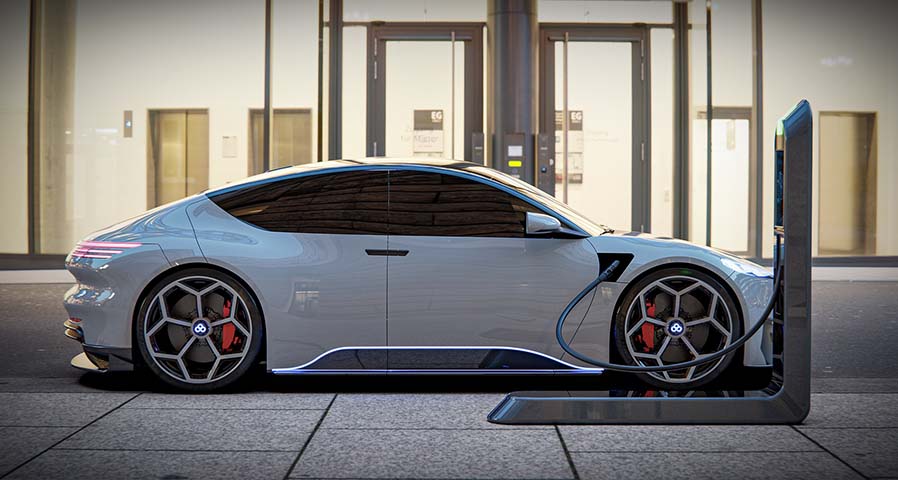
EV charging speed is not constant. Charging curves and peak charging rates determine how quickly a vehicle charges at different battery levels. For commercial facilities, understanding these concepts helps set expectations and design better EV charging solutions.
What are EV charging curves and peak charging rates?
Charging an electric vehicle is different from fueling a gas-powered car. Instead of a constant fill rate, EV charging speeds vary throughout the session. This is where charging curves and peak charging rates come into play.
For commercial property owners and facility managers, understanding these concepts is essential for planning EV infrastructure and managing user expectations.
An EV charging curve represents how charging speed changes as the battery charges from low to high capacity.
In simple terms:
This happens because EV batteries are designed to protect themselves from heat and stress as they near full charge.
Why Charging Slows Down
When a battery is nearly empty, it can accept energy quickly. As it fills, the system reduces charging speed to:
This gradual slowdown creates the “curve” seen in EV charging performance.
The peak charging rate is the maximum speed at which an EV can charge under optimal conditions.
This is typically measured in kilowatts (kW) and is often used to describe charger capabilities, such as:
However, peak charging rate depends on two key factors:
1. Charger Capability
The charger itself has a maximum output limit.
2. Vehicle Capability
The EV determines how much power it can accept.
Even if a charger is rated for high output, the vehicle may limit how much power it draws.
Charging curves and peak rates are closely related.
Example
A vehicle connected to a high-speed DC charger may:
This is why total charging time is not determined by peak speed alone.
Understanding charging curves is important for both EV drivers and facility operators.
Drivers may expect fast charging based on advertised peak speeds. However, actual charging time depends on where the battery is along the curve.
This is especially important for:
Charging slows significantly after 80%, which can impact charger availability.
Encouraging drivers to:
can help improve overall system efficiency.
Facilities that understand charging behavior can:
Peak charging rates are often used as a benchmark for charger performance, but they should be viewed in context.
A charger rated for higher output may not always deliver that speed if:
Different EV models have different charging capabilities.
Some vehicles are designed to:
Others may have lower peak rates or more aggressive slowdowns as the battery fills.
Charging curves are most noticeable with DC fast charging.
For commercial facilities, this distinction is important when deciding which charging type to deploy.
Charging curves and peak rates should influence how EV infrastructure is designed and deployed.
For example:
Understanding charging behavior ensures your infrastructure aligns with real-world usage.
Plan Your EV Charging Strategy the Right Way
Charging speed is not just about peak performance—it is about how charging behaves over time.
Visit our EV Charging Solutions page to learn how Action Services Group helps organizations design EV charging systems that balance performance, cost, and user experience. When you are ready, schedule a call with our team to discuss your facility and charging goals.
👉 Explore EV Charging Solutions
👉 Schedule a Call with Our Experts
Charging curves are especially important if:
In these cases, understanding charging performance can significantly impact efficiency and ROI.
As EV technology advances, charging curves and peak rates continue to improve.
Emerging trends include:
These advancements will reduce charging times and improve overall user experience.
What is an EV charging curve?
An EV charging curve shows how charging speed changes as the battery fills, with faster speeds at low charge levels and slower speeds near full capacity.
What is peak charging rate?
Peak charging rate is the maximum speed an EV can charge under ideal conditions, typically measured in kilowatts (kW).
Why does charging slow down after 80%?
Charging slows to protect the battery from heat and stress, which helps extend battery life.
Do all EVs charge at the same speed?
No. Charging speed depends on both the vehicle’s capabilities and the charger being used.
Is DC charging faster than Level 2 charging?
Yes. DC fast charging delivers higher power directly to the battery, resulting in faster charging speeds.
EV charging curves and peak charging rates play a critical role in how charging systems perform in real-world conditions. While peak speeds are often highlighted, the full charging curve determines how long a vehicle actually takes to charge.
For commercial facilities, understanding these concepts helps improve infrastructure planning, optimize charger usage, and enhance the overall user experience.
If you are planning EV charging infrastructure, Action Services Group can help you design a solution that aligns with your facility’s needs and long-term goals. To get started, call 610-558-9773, email [email protected], or schedule a consultation with our team.

When retrofitting your LEDs, lightbulbs have various illuminance. Theres different ways to measure the lighting of…

Understanding light measurements, luminance and foot-candle can help when choosing the perfect bulb for you next…

Exit signs and emergency lighting need to be in accordance with the NFPA, OSHA, and other…
When retrofitting your LEDs, lightbulbs have various illuminance. Theres different ways to measure the lighting of your next retrofit.
Understanding light measurements, luminance and foot-candle can help when choosing the perfect bulb for you next retrofit.
Exit signs and emergency lighting need to be in accordance with the NFPA, OSHA, and other state or local ordinances.