
Lighting Measurements – An In-depth Guide Part 1
When retrofitting your LEDs, lightbulbs have various illuminance. Theres different ways to measure the lighting of…

This blog was originally published October 13, 2021, and has been updated October 13, 2026.
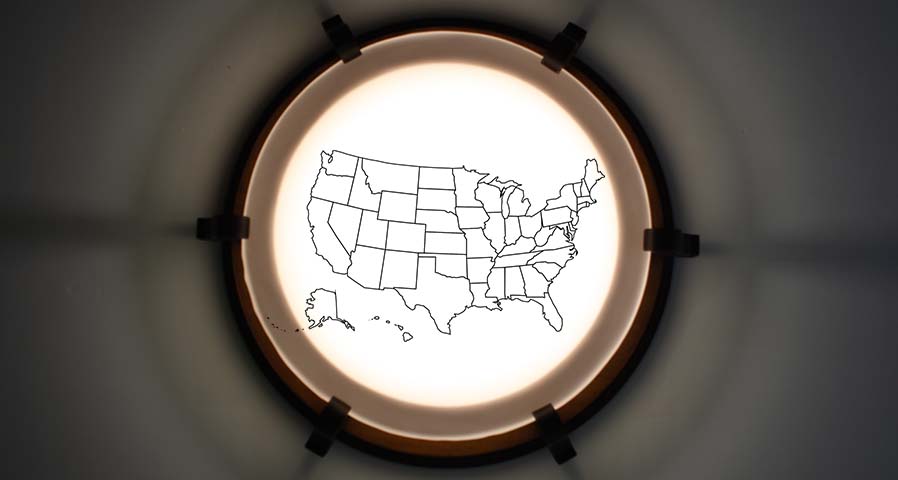
Federal and state light bulb bans restrict the sale of certain lighting products, but they generally do not prohibit using bulbs already installed in a building. Federal efficiency standards affect many traditional incandescent and halogen general-service lamps. State laws increasingly restrict sales of mercury-containing compact fluorescent lamps (CFLs) and fluorescent tubes.
For businesses, the main concern is replacement availability. A fluorescent system may remain operational after a sales ban, while the lamps needed to maintain it become unavailable for legal purchase.
This guide explains U.S. light bulb bans and the state restrictions affecting commercial lighting procurement as of October 2026.
General Service Lamps (GSLs) are bulbs used for everyday general illumination, including many common screw-base bulbs. The federal 45-lumens-per-watt sales threshold applies to covered GSLs. Linear fluorescent tubes, such as four-foot T8s and T12s, fall under separate federal and state requirements and are not part of a nationwide blanket GSL ban.
Federal law prohibits selling covered general-service lamps that fail to meet a minimum efficacy of 45 lumens per watt. Efficacy measures how much visible light a bulb produces for each watt of electricity.
Many traditional incandescent and halogen bulbs cannot meet this threshold. The restriction depends on performance and the federal product definition, rather than prohibiting every incandescent or halogen lamp. Certain specialty products fall outside that definition.
In 2026, covered general-service bulbs below the federal threshold remain restricted nationwide. Additional state laws prohibit sales of specified CFLs and fluorescent tubes.
The Department of Energy also lists stronger general-service lamp standards with a compliance date of July 25, 2028. Those future requirements should not be presented as the standards applicable in 2026.
Generally, no. State light bulb bans typically restrict the sale, offering for sale, or distribution of covered lamps. They do not automatically require owners to remove working bulbs.
However, continuing to operate an installed bulb is different from installing a new replacement. Some efficiency laws also restrict installation of new, noncompliant products.
In states such as Nevada and New Jersey, retaining a stockpile of legacy fluorescent tubes does not exempt new regulated products from installation requirements. Contractors and maintenance personnel installing covered products for compensation must comply with applicable efficiency requirements. New Jersey also requires the prescribed compliance mark, label, or tag.
Nevada’s restriction on installation for compensation began January 1, 2024. New Jersey’s covered-product installation requirements began January 18, 2023. Purchasing lamps before those dates does not, by itself, establish that later installation is permitted.
Stay Ahead of Lighting Regulations with Smarter LED Solutions
As states continue to update lighting efficiency standards and restrict certain types of light bulbs, commercial facility managers need to understand how these changes may impact lighting maintenance, replacement products, and future upgrades. Choosing the right LED alternatives can help organizations navigate changing requirements while improving energy efficiency, lighting performance, and long-term operating costs.
Explore our Lighting & LED Product Education Center to learn more about commercial lighting technologies, fixture types, and application-specific solutions. Then, connect with our lighting experts to discuss how Action Services Group can help you evaluate your existing lighting systems and plan for future lighting needs across your facilities.
Yes, businesses can generally continue using fluorescent bulbs already installed after a sales ban. Minnesota’s guidance explicitly distinguishes its sales phaseout from a prohibition on use. Other state laws similarly focus on sales and distribution of new products.
The maintenance challenge arises when a lamp fails. A business may be unable to buy a covered fluorescent replacement, even though operating the existing system remains permitted.
Fluorescent sales bans can therefore affect existing buildings without imposing an immediate retrofit deadline. Separate building codes or building-performance requirements may create additional obligations.
Federal general-service lamp requirements apply nationwide. The table below summarizes additional state restrictions, including the difference between broad fluorescent sales bans and narrower efficiency standards. Dates apply to covered products, subject to statutory exemptions.
| State or jurisdiction | Effective dates and 2026 status | Covered lamp types | Commercial purchasing and maintenance impact |
| California | Screw/bayonet CFLs: January 1, 2024. Pin-base CFLs and linear lamps: January 1, 2025. Currently effective. | Covered CFLs and linear fluorescent lamps, including qualifying T8 and T12 tubes | Covered new replacement lamps cannot be sold or distributed; working installed lamps generally may remain in use. |
| Colorado | January 1, 2025. Currently effective. | Covered compact and linear fluorescent lamps | Restrictions cover manufacture, distribution, and sales; specialty exceptions apply. |
| Connecticut | No broad statewide fluorescent sales phaseout identified in this review | Federal restrictions and applicable mercury-management requirements | Confirm product compliance and disposal requirements. |
| Hawaii | Screw/bayonet CFLs: January 1, 2025. Pin-base CFLs and linear lamps: January 1, 2026. Currently effective. | Covered CFLs and linear fluorescent lamps | Replacement purchases are restricted unless an exemption applies. |
| Illinois | Screw/bayonet CFLs: January 1, 2026. Pin-base CFLs and linear lamps: January 1, 2027. | Covered CFLs; linear fluorescent restrictions begin in 2027 | CFL restrictions are active; facilities using fluorescent tubes should plan for the 2027 deadline. |
| Maine | January 1, 2026. Currently effective. | Compact and linear fluorescent mercury-added lamps | Covered new lamps cannot be offered for sale, sold, or distributed. |
| Maryland | High-CRI products addressed through the efficiency framework; no broad fluorescent phaseout enacted under HB747 | Specified high-CRI fluorescent products | Do not treat proposed CFL and tube phaseout dates as active law. |
| Massachusetts | Appliance-efficiency requirements effective January 1, 2022 | High-CRI fluorescent lamps and specified state-regulated general-service lamps | Covered products must meet efficiency requirements; this is not a blanket fluorescent ban. |
| Minnesota | Screw/bayonet CFLs and mercury vapor products: January 1, 2025. Pin-base CFLs and linear lamps: January 1, 2026. Currently effective. | Covered CFLs, linear fluorescent lamps, mercury vapor lamps and ballasts | Covered new replacement purchases are restricted; continued operation is generally allowed. |
| Nevada | Noncompliant covered-product sales: July 1, 2023. Installation for compensation: January 1, 2024. | High-CRI, cold-temperature, and impact-resistant fluorescent lamps | Check efficacy before purchasing or installing stored lamps; the broader AB144 phaseout was vetoed. |
| New Jersey | Covered-product sales and installation requirements: January 18, 2023 | High-CRI, cold-temperature, impact-resistant fluorescent lamps and specified general-service lamps | New regulated products installed for compensation must meet efficiency and labeling requirements. |
| New York | Relevant efficiency standards: June 26, 2023. Broader fluorescent phaseout remains proposed. | Federally exempt fluorescent lamp categories | Check product compliance; proposed 2029 restrictions are not enacted law. NYC has separate building requirements. |
| North Carolina | No broad statewide fluorescent sales phaseout identified in this review | Federal restrictions; fluorescent lamp disposal rules | Distinguish purchasing requirements from landfill disposal restrictions. |
| Oregon | Screw/bayonet CFLs: January 1, 2024. Pin-base CFLs and linear lamps: January 1, 2025. Currently effective. | Covered CFLs and linear fluorescent lamps | Purchasing exemptions include qualifying large facility portfolios and specified school or specialty applications. |
| Pennsylvania | No broad statewide fluorescent sales phaseout identified in this review | Federal restrictions and applicable waste-management requirements | Proposed efficiency legislation is separate from active law. |
| Rhode Island | Screw/bayonet CFLs: January 1, 2024. Pin-base CFLs and linear lamps: January 1, 2025. Currently effective. | Covered CFLs and linear fluorescent lamps | Covered new replacement sales and distribution are restricted; specialty exceptions apply. |
| Vermont | Screw-base CFLs: February 17, 2023. Four-foot linear tubes and additional CFL restrictions: January 1, 2024. | Screw-base CFLs, GU24 twist-lock CFLs, and general-purpose four-foot fluorescent tubes | Confirm tube length and lamp category; restrictions are not identical for every fluorescent product. |
| Washington | Broader CFL and linear sales ban: January 1, 2029. Limited inventory sell-through until July 1, 2029. | Covered CFLs and linear lamps; existing high-CRI efficiency requirements | Plan for 2029 while checking current efficacy requirements. |
| Washington, D.C. | Existing appliance-efficiency requirements | High-CRI, cold-temperature, and impact-resistant fluorescent lamps | Covered products must meet minimum efficacy requirements; no blanket fluorescent ban is established by these standards. |
The state sections below explain these distinctions and the purchasing exceptions that matter for commercial facilities.
State restrictions fall into two main categories: broad fluorescent sales phaseouts and efficiency requirements for specified products.
High-CRI rules commonly address fluorescent lamps with a color rendering index of 87 or greater. Requiring these products to meet minimum efficacy standards is different from prohibiting all fluorescent lamps.

California’s screw-base and bayonet-base CFL restrictions began January 1, 2024. Restrictions expanded to pin-base CFLs and covered linear fluorescent lamps on January 1, 2025.
Covered replacement purchases are restricted, including qualifying T8 and T12 fluorescent products. The law does not require removing all working fluorescent bulbs.
Colorado’s restrictions have been effective since January 1, 2025. With specified exceptions, the law prohibits manufacturing, distributing, selling, or offering compact and linear fluorescent lamps for sale in Colorado.
Federal general-service lamp restrictions apply in Connecticut. This review did not identify an enacted broad statewide CFL and linear fluorescent sales phaseout.
Connecticut’s environmental guidance encourages LED alternatives and proper management of mercury-containing lamps.
Hawaii’s screw-base and bayonet-base CFL sales restrictions began January 1, 2025. As of January 1, 2026, restrictions on new pin-base CFLs and covered linear fluorescent lamps are also in effect.
Specified exemptions remain available for qualifying applications.
Illinois’s screw-base and bayonet-base CFL restrictions are currently effective and began January 1, 2026.
Restrictions on pin-base CFLs and covered linear fluorescent lamps begin January 1, 2027. Businesses maintaining fluorescent tube systems should plan replacement options around that separate deadline.
As of January 1, 2026, Maine prohibits offering for sale, selling, or distributing new compact fluorescent mercury-added lamps and linear fluorescent mercury-added lamps.
The enacted deadline covers both categories. Older summaries showing a separate 2025 screw-base CFL deadline should be corrected.
Maryland’s efficiency framework addresses high-CRI fluorescent lamps. That framework should not be confused with a statewide phaseout of all fluorescent lighting.
The broader phaseout proposed in HB747 during the 2024 session did not become law. Its proposed purchasing deadlines are not active requirements.
Turn Changing Lighting Regulations into an Opportunity for Savings
As more states implement lighting efficiency standards and phase out certain traditional light bulbs, commercial facilities may need to rethink their lighting replacement and upgrade strategies. Transitioning to LED technology can help organizations adapt to changing requirements while reducing energy consumption, lowering maintenance costs, and improving lighting performance across their properties.
Explore our LED Retrofit Solutions to see how Action Services Group helps commercial facilities transition from outdated lighting systems to energy-efficient LED technology. Then, connect with our lighting experts to discuss your existing lighting infrastructure, potential savings, and opportunities for a strategic LED upgrade.
Massachusetts’s appliance-efficiency requirements cover high-CRI fluorescent lamps and specified state-regulated general-service lamps.
Covered products must meet applicable efficiency standards. These requirements do not constitute a blanket prohibition on every fluorescent lamp.
Minnesota’s restrictions on new screw-base and bayonet-base CFLs, mercury vapor lamps, and mercury vapor ballasts began January 1, 2025.
As of January 1, 2026, restrictions on new pin-base CFLs and covered linear fluorescent lamps are also in effect. The mercury vapor provision should not be generalized into a ban on every HID lamp technology.
Nevada requires covered high-CRI, cold-temperature, and impact-resistant fluorescent lamps to meet minimum efficacy standards. Noncompliant covered-product sales have been restricted since July 1, 2023, and installation for compensation since January 1, 2024.
The broader fluorescent phaseout proposed in AB144 was vetoed in 2023. The bill never met its proposed deadline requirements.
New Jersey regulates covered high-CRI, cold-temperature, and impact-resistant fluorescent lamps, along with specified general-service lamps.
Since January 18, 2023, covered new products sold or installed for compensation must meet the law’s efficiency and compliance-labeling requirements. Stored inventory is not automatically exempt.
New York’s relevant efficiency standards for federally exempt fluorescent lamps took effect June 26, 2023.
A broader phaseout proposed in S4691B would begin in 2029. As of this review, the bill remains in Assembly committee and is not enacted law.
New York City’s Local Law 88 separately requires covered buildings to upgrade lighting to applicable energy-code standards. It should not be described as a statewide requirement to replace every bulb with LED.
Federal restrictions apply in North Carolina. This review did not identify an enacted broad statewide fluorescent sales phaseout.
North Carolina’s fluorescent lamp landfill restrictions govern disposal, which is a separate issue from buying or operating lamps.
Oregon’s screw-base and bayonet-base CFL restrictions began January 1, 2024—Pin-base CFL and covered linear fluorescent restrictions followed on January 1, 2025.
A 2026 law added a temporary purchasing exemption for qualifying owners or operators whose Oregon facilities together exceed one million square feet. Specified school and specialty exemptions also affect eligibility.
Federal general-service lamp standards apply in Pennsylvania. This review did not identify an enacted broad statewide fluorescent sales phaseout.
Proposed product-efficiency legislation should remain separate from active requirements. Businesses must also properly manage discarded fluorescent lamps.
Rhode Island’s screw-base and bayonet-base CFL restrictions began January 1, 2024. Restrictions expanded to pin-base CFLs and covered linear fluorescent lamps on January 1, 2025.
Technical and specialty exceptions apply.
Vermont’s screw-base CFL sales restriction began February 17, 2023. Additional restrictions took effect January 1, 2024, including general-purpose four-foot fluorescent tubes and GU24 twist-lock CFLs.
Businesses should confirm lamp category and length rather than assuming every fluorescent tube has identical restrictions.
Washington already has efficiency requirements affecting covered high-CRI fluorescent lamps. Its broader CFL and linear fluorescent sales prohibition begins January 1, 2029.
Qualifying in-state distributors, wholesalers, and retailers may sell inventory held on that date until July 1, 2029. This limited sell-through permission applies only to Washington law.
The District of Columbia requires covered high-CRI, cold-temperature, and impact-resistant fluorescent lamps to meet minimum efficacy standards.
These requirements restrict noncompliant products rather than establishing a blanket ban on all fluorescent lighting.
Businesses generally cannot purchase covered new fluorescent lamps through a prohibited sale after the applicable deadline. Exceptions may allow specialty products, eligible purchasers, or sell-through of specifically authorized inventory.
An online listing does not establish that a product can legally be sold or delivered into the destination state. Confirm the lamp category, destination, exemption, and installation requirements before ordering.
Does a T8 or T12 designation identify a banned light bulb?
No. T8 and T12 describe tube diameter, not legal status. Coverage also depends on technology, length, application, and the state’s product definition. An LED tube with the same diameter is a different technology.
Do specialty ultraviolet lamps fall under fluorescent sales bans?
Some laws exempt qualifying germicidal, medical, research, or image-production lamps. Eligibility depends on the statutory requirements, which may include how the product is designed and marketed.
How should businesses dispose of fluorescent bulbs during an upgrade?
Keep removed lamps intact and arrange appropriate lamp recycling. Hazardous-waste lamps may fall under universal waste requirements, and state handling rules vary. EPA recommends establishing a collection and recycling process for business-generated lamps. www.epa.gov
State light bulb bans can affect maintenance purchasing before a facility needs a complete renovation. Identify existing lamp types, review replacement restrictions, and prioritize locations where failures would disrupt operations.
Action Services Group can help evaluate existing lighting, identify LED replacement options, and coordinate upgrades across commercial properties. Schedule a call with our lighting professionals to build a transition plan around your maintenance needs and budget.
When retrofitting your LEDs, lightbulbs have various illuminance. Theres different ways to measure the lighting of…
Understanding light measurements, luminance and foot-candle can help when choosing the perfect bulb for you next…
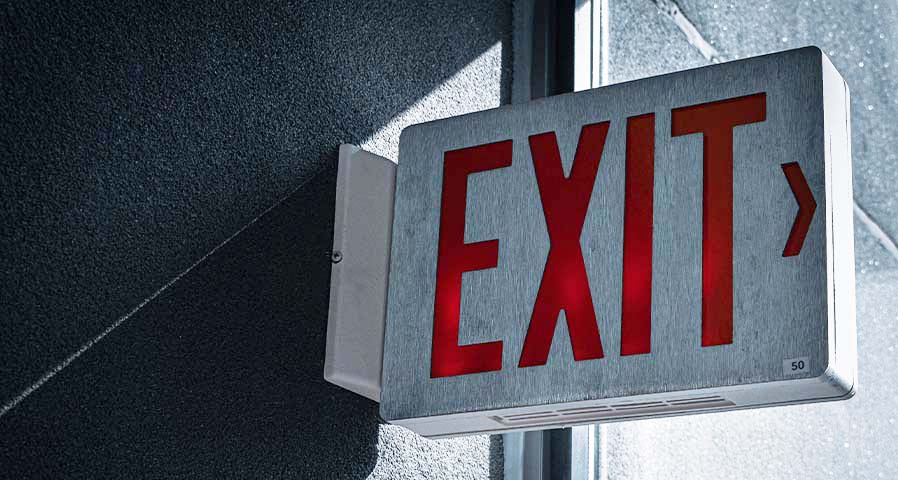
Exit signs and emergency lighting need to be in accordance with the NFPA, OSHA, and other…
When retrofitting your LEDs, lightbulbs have various illuminance. Theres different ways to measure the lighting of your next retrofit.
Understanding light measurements, luminance and foot-candle can help when choosing the perfect bulb for you next retrofit.
Exit signs and emergency lighting need to be in accordance with the NFPA, OSHA, and other state or local ordinances.