
Lighting Measurements – An In-depth Guide Part 1
When retrofitting your LEDs, lightbulbs have various illuminance. Theres different ways to measure the lighting of…

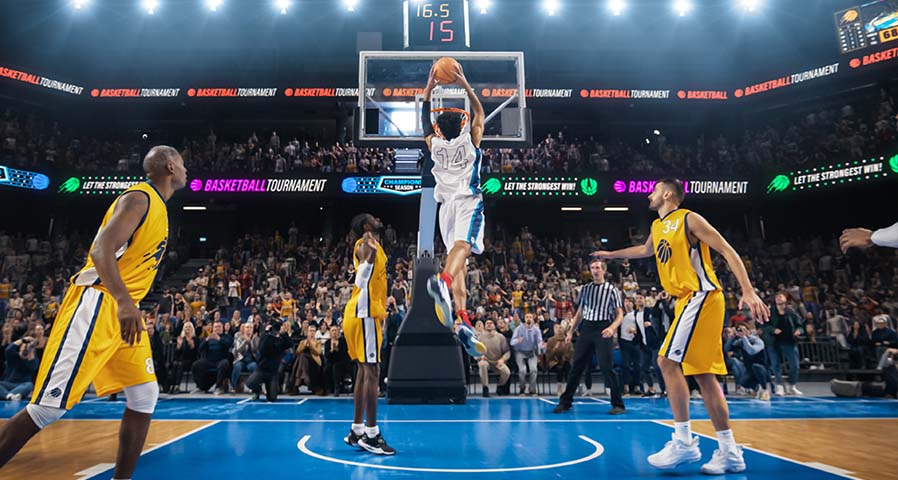
Energy Efficiency: Reduces power consumption by 65–70% compared to legacy metal halide systems.
Performance Standards: Recommended light levels range from 300 lux (recreation) to 1,000+ lux (televised competition).
Operational Life: Fixtures last 50,000 to 100,000 hours, drastically reducing maintenance and lift rental costs.
Safety & Tech: Features instant-on capability, flicker-free broadcasting support, and advanced glare control.
Financial Incentives: Most projects qualify for significant utility rebates via DLC or ENERGY STAR certification.
Indoor LED sports lighting is engineered for high-speed movement and visual precision, delivering higher uniformity and flicker-free performance that standard office lighting cannot match. While commercial lighting focuses on general illumination, sports systems are designed to help athletes track fast objects and help coaches read body mechanics without the distraction of glare or shadows.
Unlike legacy metal halide systems that require long warm-up times, modern LEDs provide instant-on capability. This allows facility managers to adjust brightness levels for different activities, practice, competition, or community events, without sacrificing efficiency.
Lighting for athletic spaces follows measurable standards rather than guesswork. Requirements vary by activity, but most indoor gyms range from 300 to 750 lux for recreation and 1,000 lux or more for televised competitions. Uniformity ratios ensure the brightest point is not dramatically higher than the dimmest, preventing shadows that distract players. A CRI of 80 or higher allows accurate color recognition for uniforms, lines, and equipment.
Broadcast venues add additional needs such as high vertical illuminance and flicker-free drivers for slow-motion cameras. Modern LED systems meet these demands while using a fraction of the power of legacy fixtures. Proper design begins with a photometric study that models the court, ceiling height, and fixture placement before any product is ordered.

Different environments require specific Kelvin temperatures to optimize performance:
Basketball Gyms: Benefit from 4,000 K to 5,000 K to keep the space bright and energetic.
Tennis & Pickleball: Often use 5000K to improve ball tracking against ceilings, paired with indirect layouts to prevent glare.
Ice Rinks: Require 5000K to provide crisp contrast between the puck and the ice markings.
Natatoriums: Neutral temperatures (4000K–4500K) create a welcoming atmosphere while helping lifeguards see beneath the water surface.
Locker Rooms: Warmer tones (3500K to 4000K) provide a clean but relaxed feel for athletes.
Indoor sports lighting requirements vary by activity and level of play, with higher-performance environments such as competitive basketball, tennis, or ice hockey requiring greater illumination to support visibility, safety, and fast-paced movement.
| Basketball training | 30 to 50 foot-candles |
| Basketball collegiate | 50 to 100 foot-candles |
| Tennis | 30 to 75 foot-candles |
| Ice hockey | 50 to 75 foot-candles |
| Multipurpose gym | 30 to 50 foot-candles |
These ranges show why design must match the highest level of play expected in the building. Schools planning tournaments should aim higher than a recreation center focused on casual use.
Poor lighting leads to missed passes, late reactions, and increased injury risk. Glare forces athletes to squint when shooting or receiving a serve. Dark corners hide hazards around weight racks, and inconsistent color temperature makes it harder to distinguish lines and uniforms. Indoor LED sports lighting addresses these issues with precise optics and stable output across the entire court.
Dimmable controls allow staff to select the right level for each event. Full brightness supports competition, while lower settings create comfortable conditions for yoga or community programs. Smart systems can automatically schedule scenes and integrate with occupancy sensors to avoid wasted power.
Typical Energy Comparison
| FEATURE | LEGACY METAL HALIDE | LED REPLACEMENT |
| SYSTEM WATTAGE | 1,080W (with ballast) | 350W |
| ENERGY REDUCTION | Baseline | 65–70% Lower |
| ANNUAL OPERATING HOURS | 4,000–5,500 hrs. | 4,000–5,500 hrs. |
| ESTIMATED ANNUAL SAVINGS | $0 | $250 – $400 per fixture |
These reductions multiply quickly in large buildings with dozens of fixtures. LEDs also eliminate frequent lamp replacements, lift rentals, and game interruptions caused by failed bulbs. Facilities that operate from early morning through evening see the fastest payback.
Quality LED fixtures operate for 50,000 to 100,000 hours, five times longer than metal halide fixtures. Maintenance shifts from constant relamping to simple cleaning and driver inspections. Dust buildup can reduce output, so periodic lens wiping restores brightness. Smart monitoring platforms can report issues before users notice dark spots on the court.
Upgrade Your Sports Lighting with Confidence
Indoor athletic facilities demand more than basic illumination, they require uniformity, glare control, flicker-free performance, and energy efficiency. Visit our LED Retrofit Solutions page to learn how Action Services Group delivers turn-key sports lighting upgrades designed for gyms, training centers, and competitive facilities.
When you’re ready, schedule a call with our lighting experts to evaluate your current system and design a high-performance LED solution that meets today’s standards.
👉 Explore LED Retrofit Solutions
👉 Schedule a Call with a Lighting Expert
Most facilities can complete athletic facility lighting upgrades as retrofits. New LEDs often reuse mounting points and electrical circuits, avoiding structural changes. Installation typically takes weeks rather than months because indoor projects are not delayed by weather or pole work. Photometric planning ensures the new layout meets standards before the first fixture is hung.
Many utilities encourage efficient lighting through incentive programs. Rebates frequently cover high bay LED fixtures, advanced controls, and LED-to-LED improvements when performance gains are documented. Incentives may be paid per fixture, per watt reduced, or as custom calculations based on operating hours. Schools, municipalities, and private clubs can all qualify when equipment meets DLC or ENERGY STAR criteria. Early coordination is essential because applications often require pre-approval and post-installation verification.
Upgrading a gym involves more than buying fixtures. Successful projects require design, product selection, installation, commissioning, and rebate management. A turn-key provider handles every stage, so facility managers avoid juggling multiple contractors. The partner performs photometric studies, specifies glare-controlled luminaires, schedules crews around events, and submits utility rebates for sports facilities on the owner’s behalf. This single-source approach shortens timelines and protects performance guarantees.
Indoor LED sports lighting is now the foundation of modern athletic environments. It delivers better visibility, lower operating costs, and flexible control across activities from youth leagues to collegiate competition. Facilities that plan upgrades with clear standards and experienced partners create spaces that feel brighter, safer, and more professional while reducing energy use for decades.

A community recreation center operating metal halide high bay fixtures seven days a week faced rising energy and maintenance costs due to fixture failures caused by everyday gymnasium activity. Working with Stouch Lighting, the facility completed an athletic facility lighting upgrade by replacing 90 existing 400W metal halide fixtures with 143W Indoor LED sports lighting. The project reduced lighting energy use by 70%, lowered annual maintenance costs by more than $7,000, and achieved an annual kWh reduction of 196,312. The upgrade also qualified for $2,160 in Utility rebates for sports facilities and is expected to deliver a full return on investment in approximately 25 months.
How much can I save by switching to LED gym lighting?
Most facilities see a 65% to 70% reduction in energy costs immediately. When you factor in the elimination of ballast replacements and lift rentals for bulb changes, total operational savings often cover the system in under 3 years.
What is the difference between Foot-candles and Lux?
Both measure light intensity on a surface. One foot-candle equals approximately 10.76 lux. In the U.S., sports lighting is often discussed in foot-candles, while international standards and engineering studies primarily use lux.
Can I use my existing dimmers with new LED sports lights?
Likely no. Older systems use phase-dimming or stepped switching, whereas modern LED sports fixtures typically require 0–10V dimming or DALI controls. A turn-key partner will ensure your control system is compatible with your new fixtures.
Does LED lighting improve video quality for scouting and broadcasts?
Yes. High-quality LEDs are flicker-free, which is essential for slow-motion playback. A high CRI of 80+ also ensures colors appear vibrant and accurate on digital screens.
How do I qualify for utility rebates on my lighting project?
To qualify, fixtures must generally be listed on the DLC Qualified Products List or be ENERGY STAR certified. You usually need to apply before the old lights are removed. A turn-key partner typically handles this paperwork for you.
Indoor LED sports lighting is a foundation for safer play, better performance, and lower operating costs across gyms and athletic facilities. Thoughtful design that balances color quality, glare control, and smart controls creates spaces that serve athletes, coaches, and communities for years to come while reducing energy use and maintenance. If you are planning an indoor lighting project or exploring Athletic facility lighting upgrades, Action Services Group can guide the process from design and product selection to installation, project management, and utility rebates for sports facilities. Reach out to Action Services Group to evaluate your space and build a turn-key lighting solution that delivers measurable results. Contact Action Services Group at 610-558-9773, email [email protected], or schedule a consultation.
When retrofitting your LEDs, lightbulbs have various illuminance. Theres different ways to measure the lighting of…
Understanding light measurements, luminance and foot-candle can help when choosing the perfect bulb for you next…
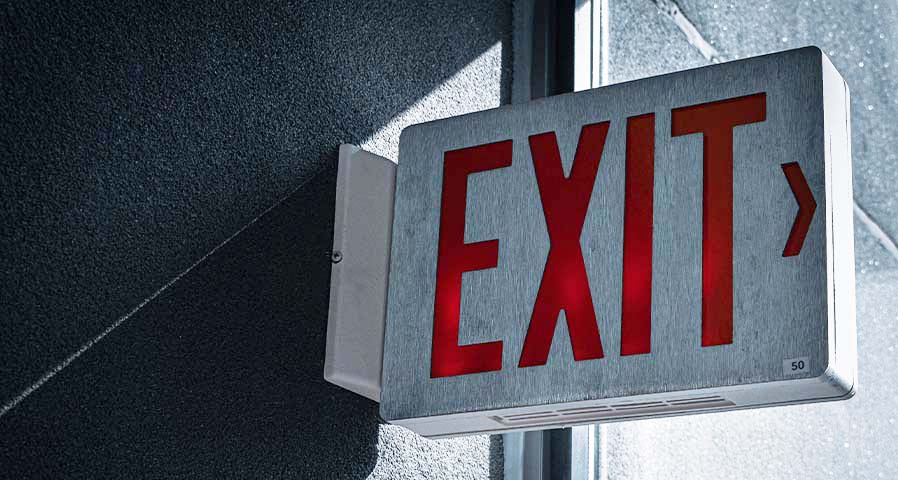
Exit signs and emergency lighting need to be in accordance with the NFPA, OSHA, and other…
When retrofitting your LEDs, lightbulbs have various illuminance. Theres different ways to measure the lighting of your next retrofit.
Understanding light measurements, luminance and foot-candle can help when choosing the perfect bulb for you next retrofit.
Exit signs and emergency lighting need to be in accordance with the NFPA, OSHA, and other state or local ordinances.