

Lighting Measurements – An In-depth Guide Part 1
When retrofitting your LEDs, lightbulbs have various illuminance. Theres different ways to measure the lighting of…

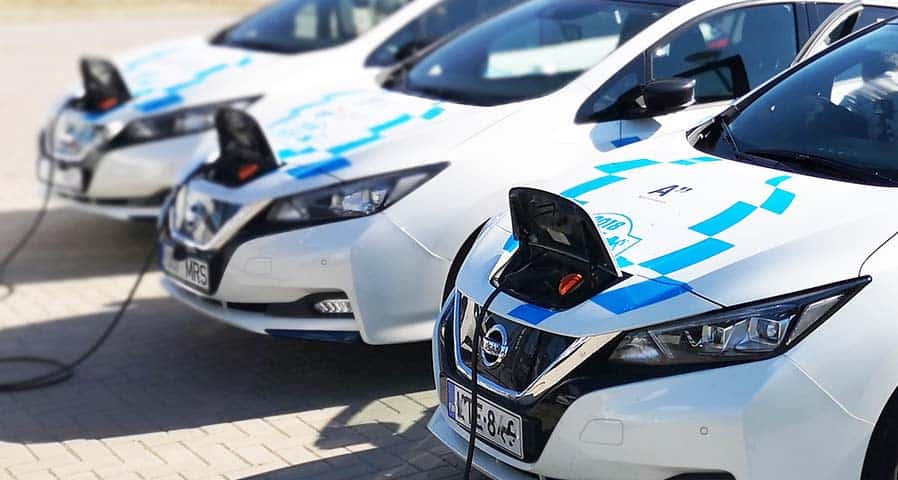
EV charging speed is one of the most common questions surrounding electric vehicle infrastructure, but the answer depends on several factors. For commercial property owners, facility managers, and organizations planning EV charging installations, understanding these variables is essential for selecting the right charging solution.
How fast do EV chargers charge, and what affects charging speed?
As EV adoption continues to grow, more commercial facilities are evaluating whether EV charging stations make sense for their properties. One of the first questions that usually comes up is simple: How fast do EV chargers charge?
The answer is not always straightforward. EV charging speed can vary significantly based on the vehicle, charger type, battery condition, and site infrastructure. Understanding these factors helps commercial property owners and facility managers make smarter decisions about EV charging deployment, user experience, and long-term infrastructure planning.
EV charging speed is typically described in one of three ways:
While range-per-hour estimates can be useful, they are not always the most reliable way to compare chargers because vehicle efficiency varies. Power output and charging time usually provide a more practical way to evaluate charger performance.
For most commercial applications, charging time is the easiest metric for understanding real-world performance.
Most EV charging discussions focus on how long it takes a battery to charge from 20% to 80% rather than from empty to full.
There are several reasons for this:
This means the fastest and most practical charging typically occurs in the middle of the battery range. For facilities planning EV charging infrastructure, this is important because user expectations should be based on realistic charging behavior, not just maximum advertised performance.
Several factors influence how quickly an EV can charge.
Vehicle Charging Capability
Not every EV can accept the same charging speed. Some electric vehicles are designed to handle much higher charging rates than others.
For example, one EV may be able to accept high-speed DC charging, while another may be capped at a much lower rate. Even if a charger is capable of delivering more power, the vehicle can only accept what its battery system is designed to handle.
Charger Type
The charger itself plays a major role in charging speed. In commercial settings, this usually means choosing between Level 2 AC charging and Level 3 DC fast charging.
Battery Size
Like fuel tanks in traditional vehicles, EV batteries come in different sizes. Larger batteries generally take longer to charge, although some larger battery systems are also designed to accept higher charging rates.
Battery State of Charge
Charging is usually fastest when the battery is at a lower state of charge and slows as it fills. This is why the 20% to 80% range is used so often when discussing charging times.
Site Electrical Infrastructure
The available electrical capacity at a property also affects charger performance. A site may need panel upgrades, utility coordination, or other electrical improvements to support faster charging.
Temperature
Battery temperature and outdoor conditions can both affect charging speed. Extreme heat or cold may reduce charging performance as the vehicle protects the battery during the charging process.
Level 2 chargers use alternating current (AC) power and are commonly installed at commercial properties where vehicles are parked for longer periods.
Level 2 charging is often ideal for:
These chargers are a strong fit for “park and charge” environments where drivers do not need a rapid turnaround.
For many commercial facilities, Level 2 charging offers the right balance of performance, affordability, and scalability.
Level 3 chargers, also called DC fast chargers, provide significantly faster charging speeds than Level 2 chargers.
These chargers are typically best for:
Because DC fast chargers deliver direct current to the battery, they can charge vehicles much more quickly than AC charging systems.
However, faster charging comes with greater infrastructure demands. Level 3 charging often requires more robust electrical service, utility coordination, and a more involved installation process.
One of the biggest differences in EV charging speed comes down to whether the charger uses AC or DC power.
The power grid supplies AC power, but EV batteries store DC power. With AC charging, the vehicle must convert the power before it can charge the battery. That conversion process takes more time.
DC fast chargers handle the conversion within the charger itself, allowing power to be delivered more directly to the battery. This is one of the main reasons Level 3 chargers are much faster than Level 2 chargers.
For facility owners and managers, understanding this difference is important when deciding what type of charging experience the property needs to provide.
Temperature is another important variable in EV charging performance.
If the battery is too hot or too cold, the vehicle may automatically reduce charging speed to protect the battery. Ambient temperature can also impact how efficiently charging occurs.
This matters for commercial properties because charger performance may vary by season, climate, and time of day. It is another reason site planning and user expectations should be based on real operating conditions, not just ideal lab scenarios.
When planning EV charging infrastructure, charging speed should be evaluated alongside how the property is actually used.
For example:
The best charging solution is not always the fastest one. It is the one that aligns with the property’s users, operations, electrical capacity, and long-term goals.
Plan Your EV Charging Infrastructure the Right Way
Understanding EV charging speeds is an important first step, but charger speed is only one part of a successful EV charging strategy. Site design, electrical capacity, charger selection, software integration, and future scalability all play a role in building the right solution.
Visit our EV Charging Solutions page to learn how Action Services Group helps organizations evaluate charging needs, select the right Level 2 and Level 3 charging infrastructure, and manage installation from start to finish. When you are ready, schedule a call with our team to discuss your property and EV charging goals.
👉 Explore EV Charging Solutions
👉 Schedule a Call with Our Experts
The right charger type depends on how your facility operates.
Many organizations may ultimately benefit from a combination of both, depending on the property type and user needs.
As EV adoption continues to rise, charging infrastructure is becoming a more important part of commercial property planning.
Modern EV charging projects increasingly involve:
As these technologies continue to evolve, commercial organizations will need charging solutions that are flexible, efficient, and aligned with long-term facility goals.
EV charging speed depends on the charger type, vehicle capability, battery size, battery state of charge, and temperature. Some applications are better suited for Level 2 charging, while others require Level 3 DC fast charging.
Level 2 chargers use AC power and are best for longer parking durations. Level 3 chargers use DC fast charging and are designed for rapid charging in higher-demand environments.
Charging usually happens fastest between 20% and 80%. After 80%, charging slows to protect battery health and manage heat.
Yes. Battery temperature and ambient weather conditions can affect charging performance. Extreme heat or cold may reduce charging speed.
Neither is universally better. Level 2 is often ideal for workplaces, apartments, and hospitality properties, while Level 3 is better for fleets, public charging, and high-turnover locations.
Understanding EV charging speed is essential for commercial property owners, facility managers, and organizations evaluating EV infrastructure. While many people focus on how fast a charger can work, the real question is which charging solution best fits the property, users, and operational goals.
Whether your facility needs Level 2 charging, Level 3 DC fast charging, or a combination of both, the right EV charging strategy should be built around performance, scalability, and long-term value.
If you are planning EV charging infrastructure for your property, Action Services Group can help you assess your site, identify the right charging solution, and manage implementation. To contact us, call 610-558-9773, email [email protected], or schedule a consultation that fits your needs.

When retrofitting your LEDs, lightbulbs have various illuminance. Theres different ways to measure the lighting of…

Understanding light measurements, luminance and foot-candle can help when choosing the perfect bulb for you next…

Exit signs and emergency lighting need to be in accordance with the NFPA, OSHA, and other…
When retrofitting your LEDs, lightbulbs have various illuminance. Theres different ways to measure the lighting of your next retrofit.
Understanding light measurements, luminance and foot-candle can help when choosing the perfect bulb for you next retrofit.
Exit signs and emergency lighting need to be in accordance with the NFPA, OSHA, and other state or local ordinances.