

Lighting Measurements – An In-depth Guide Part 1
When retrofitting your LEDs, lightbulbs have various illuminance. Theres different ways to measure the lighting of…

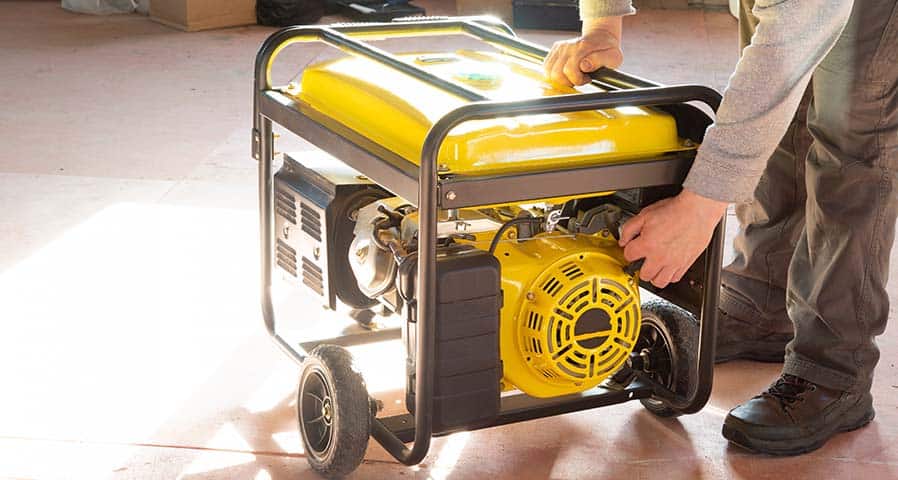
Backup power strategies directly impact business continuity, revenue protection, and operational risk. Choosing between generators or battery backup requires a clear understanding of outage duration, system load, and long-term cost exposure.
How should businesses decide between generators or battery backup systems?
Power outages can lead to massive financial setbacks. According to the U.S. Department of Energy, outages cost U.S. businesses approximately $121 billion annually. That figure includes lost productivity, equipment damage, inventory loss, and safety risks.
Did You Know?
A study in South Carolina found that a single outage can cost a business up to $140,000, depending on the industry and duration.
These numbers establish the stakes: selecting the right commercial backup power option is a decision that can affect a business’s entire operation.
Commercial backup power options typically fall into two categories: battery backup systems and standby generators.
Battery systems store electricity and discharge it during outages. Generators produce electricity on demand using fuel sources such as natural gas, diesel, or propane. Each solution addresses different operational needs.
A residential example from storm-prone regions highlights a broader principle: battery systems perform best during short outages, while generators sustain operations during extended disruptions. This same dynamic applies to commercial and industrial facilities where uptime is critical.
Battery backup systems provide immediate, seamless power when the grid fails. They integrate with solar systems, building controls, and energy management platforms.
Advantages of battery backup systems:
Limitations for commercial use:
Battery systems work best in environments where short outages are common or where energy optimization is a priority.
Standby generators remain the backbone of industrial backup power because they deliver consistent, long-duration energy.
Advantages of generators:
Challenges to consider:
In healthcare environments, backup power is a life-safety requirement. A case involving Aurora Health Care showed how generator systems maintained critical operations during a utility outage, preventing disruptions to patient care.
Facilities such as hospitals follow strict standards, such as NFPA 110, which governs emergency power system performance, testing, and reliability. This reinforces why generators remain the default choice for mission-critical applications.
| Feature | Battery Backup System | Standby Generator |
| Power Duration | Short (hours) | Long (days to weeks) |
| Energy Source | Stored electricity | Natural gas, diesel, propane |
| Noise Level | Silent | Moderate to loud |
| Maintenance | Minimal | Regular servicing required |
| Load Capacity | Limited | High (full facility support) |
| Sustainability | High (solar-compatible) | Moderate (fuel-based) |
| Best Use Case | Short outages, partial loads | Long outages, full operations |
The right solution depends on how a facility defines risk and uptime requirements.
Instead of asking “generators or battery backup,” evaluate backup power using this three-part framework:
Best Practice:
Use a hybrid approach. Batteries handle short-term continuity and energy optimization, while generators provide long-duration reliability.
The best commercial backup power strategy aligns energy resilience with business risk.
Businesses that apply this framework move beyond simple comparisons and build a backup power strategy that protects operations, reduces financial risk, and supports long-term energy goals.
Click here to read the full article, originally published by The Generator Guys.

When retrofitting your LEDs, lightbulbs have various illuminance. Theres different ways to measure the lighting of…
Understanding light measurements, luminance and foot-candle can help when choosing the perfect bulb for you next…
Exit signs and emergency lighting need to be in accordance with the NFPA, OSHA, and other…
When retrofitting your LEDs, lightbulbs have various illuminance. Theres different ways to measure the lighting of your next retrofit.
Understanding light measurements, luminance and foot-candle can help when choosing the perfect bulb for you next retrofit.
Exit signs and emergency lighting need to be in accordance with the NFPA, OSHA, and other state or local ordinances.