

Lighting Measurements – An In-depth Guide Part 1
When retrofitting your LEDs, lightbulbs have various illuminance. Theres different ways to measure the lighting of…


This is part 3 of our four-part commercial LED lighting series. Review our previous blogs: Part 1: How Long Do Commercial LED Lights Last? Understanding LED Lifespan and Rated Life, and Part 2: What Do L70, L80, and L90 Mean in LED Lighting? Understanding Lumen Maintenance, for more information on LED lifespan. After this blog, continue to Part 4: When Should Commercial LED Lighting Be Replaced?
Commercial LED lighting should carry an electrical safety certification appropriate to its installation, environmental ratings matched to actual exposure, and any application-specific approvals the space requires. Performance qualifications such as DLC can also support fixture selection and utility rebate eligibility.
Understanding LED lighting ratings and certifications helps facility managers evaluate safety, durability, and efficiency separately. No single mark confirms that a fixture meets every project requirement.
LED lighting ratings describe specific characteristics, such as water resistance, impact resistance, or lumen maintenance. Certifications confirm that a third party has evaluated a product against defined requirements. A listing identifies products covered by a certification program; a qualification identifies products meeting a program’s performance criteria.
For example, IP66 describes enclosure protection, while UL Listed identifies a safety certification. Neither establishes a fixture’s suitability for every commercial environment. Review the underlying standard, test documentation, and installation limitations.
These commercial LED lighting certifications identify third-party evaluation against applicable safety standards, including requirements addressing electrical shock, fire, and construction hazards.
| Mark | What it means for fixture selection |
| UL Listed | UL Solutions certifies the product to applicable safety requirements. UL 1598 commonly applies to complete luminaires. |
| ETL Listed | Intertek certifies the product to applicable safety standards, which may include the same UL standards used for UL certification. |
| CSA Certified | CSA Group certifies the product to applicable standards. Check whether its mark covers U.S. requirements, Canadian requirements, or both. |
ETL certification is equivalent in its safety-certification role to UL certification when both cover the same applicable standard and intended use. UL, Intertek, and CSA Group operate as OSHA-designated Nationally Recognized Testing Laboratories (NRTLs) within their approved scopes. The certification body’s name alone does not establish a fixture’s suitability.
Also verify dry, damp, or wet-location markings. A covered canopy may still experience wind-driven rain, making a damp-location fixture unsuitable. Follow the certified mounting orientation and manufacturer’s instructions. Safety certification does not guarantee operating life or energy savings.

DLC qualified products appear on the DesignLights Consortium Qualified Products List, or QPL, after meeting applicable performance requirements. Often called “DLC listed,” these products satisfy category-specific criteria addressing efficacy, light quality, and controllability.
DLC Standard meets the baseline requirements for its category. DLC Premium adds more demanding requirements, including higher efficacy thresholds and additional controllability criteria. Premium does not mean a fixed increase in lumens or an identical efficiency advantage across all categories.
DLC introduced SSL Version 6.0 requirements in 2026. Check the version and qualification status your utility accepts rather than relying on an older specification sheet. A Premium fixture may qualify for a higher incentive, but the utility sets eligibility and payment rules.
ENERGY STAR LED lighting coverage is now narrower than many older purchasing guides suggest. EPA sunsets its broad Lamps and Luminaires specifications on December 31, 2024; eligible downlights and downlight retrofit kits continue under a separate specification.
Verify the current product category and model record. A building’s ENERGY STAR certification is separate from certification of individual lighting products.
An IP rating describes enclosure protection under IEC 60529. Its first digit addresses solids; its second addresses water. IP65 and IP66 both indicate dust-tight construction, with protection against water jets and powerful water jets, respectively. Neither establishes suitability for immersion.
An IK rating describes resistance to mechanical impact under IEC 62262. IK08 corresponds to 5 joules of impact energy; IK10 corresponds to 20 joules. These ratings help compare fixtures exposed to accidental contact, but they don’t make a fixture indestructible.
IP and IK ratings do not replace electrical safety listings. Also check ambient temperature limits, corrosion resistance, and compatibility with cleaning chemicals. Pressure, temperature, and cleaning methods must stay within the manufacturer’s documented limits.
Use the following priorities to guide specifications. Actual requirements depend on site conditions and applicable codes.
| Environment | Ratings and documentation to evaluate |
| Warehouses | Appropriate safety and location listing, DLC status, dust protection, ceiling-temperature limits, and impact resistance where needed. |
| Parking lots | Wet-location listing, suitable IP protection, surge protection, DLC qualification, and BUG ratings consistent with local restrictions. |
| Commercial kitchens | Sanitation certification for the applicable zone, suitable moisture protection, cleanable construction, and documented cleaning compatibility. |
| Industrial facilities | Environmental durability plus hazardous-location certification wherever the area classification requires it. |
| Exterior walls and walkways | Wet or damp suitability based on exposure, temperature and corrosion limits, and optics that control spill and glare. |
NSF certification to applicable sanitation requirements, commonly NSF/ANSI 2 for lighting, addresses suitability for designated food-service environments. Confirm the listed zone (e.g., splash or nonfood) and the required protection against contamination from breakage. “NSF rated” marketing language alone does not confirm coverage for the installation.
Hazardous-location markings identify suitability for classified areas—Class I addresses flammable gases or vapors; Class II addresses combustible dust. Within Class I, Division 1 generally involves hazards during normal operations, while Division 2 generally involves abnormal conditions. A qualified professional must confirm the classification, material group, temperature code, and ambient limits. A high IP rating cannot establish hazardous-location suitability.
BUG (backlight, uplight, and glare) ratings follow IES TM-15-11 and use separate scales from 0 to 5 to characterize outdoor optical distribution. Lower values indicate less light in the corresponding zones. Verify ratings for the selected optics and output, then evaluate mounting, aiming, property boundaries, and local lighting ordinances.
Choose the Right LED Lighting Solutions for Long-Term Performance
Understanding LED lighting ratings and certifications is essential for selecting fixtures that meet commercial performance, safety, and application requirements. From evaluating product quality and energy efficiency to ensuring fixtures are suitable for their intended environments, making informed lighting decisions can help facility managers reduce maintenance concerns, improve reliability, and maximize long-term savings.
Explore our LED Retrofit Solutions to see how Action Services Group helps commercial facilities transition from traditional lighting technologies to energy-efficient LEDs. If your facility already has an aging LED system, review our Next Gen LED Solutions to discover how newer LED technology and advanced lighting controls can improve performance, provide greater flexibility, and unlock additional energy savings. Then, connect with our lighting experts to discuss the right upgrade strategy for your facilities.
👉 Explore Our LED Retrofit Solutions
Does a UL Recognized Driver Make the Entire Fixture UL Listed?
No. Component recognition applies to that component under specified conditions. The complete luminaire needs its own applicable certification.
Can a Contractor Substitute a Different Driver or Sensor?
Only after verifying that the replacement is permitted within the fixture’s certification and manufacturer’s instructions. Changes can also affect controls compatibility and rebate qualification.
Does DLC Qualification Guarantee a Rebate?
No. Utilities may impose customer, project, controls, documentation, and deadline requirements beyond product qualification. Obtain confirmation for the specific project.
Selecting properly rated and qualified fixtures supports electrical safety, code compliance, environmental durability, and rebate eligibility. It also helps prevent procurement mistakes that delay commercial LED retrofit projects.
Action Services Group provides turnkey LED retrofit services, including project planning, fixture procurement, installation, controls integration, and ongoing lighting maintenance. Contact Action Services Group to evaluate your facility’s lighting needs and plan an upgrade with fixtures suited to your operating conditions and project requirements.
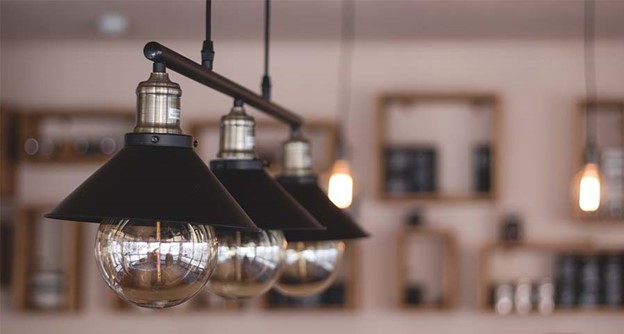
When retrofitting your LEDs, lightbulbs have various illuminance. Theres different ways to measure the lighting of…

Understanding light measurements, luminance and foot-candle can help when choosing the perfect bulb for you next…
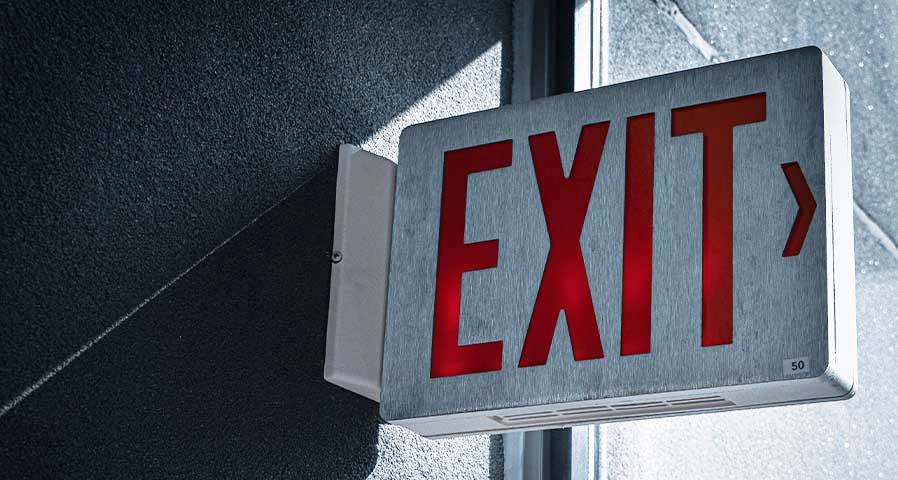
Exit signs and emergency lighting need to be in accordance with the NFPA, OSHA, and other…
When retrofitting your LEDs, lightbulbs have various illuminance. Theres different ways to measure the lighting of your next retrofit.
Understanding light measurements, luminance and foot-candle can help when choosing the perfect bulb for you next retrofit.
Exit signs and emergency lighting need to be in accordance with the NFPA, OSHA, and other state or local ordinances.