

Lighting Measurements – An In-depth Guide Part 1
When retrofitting your LEDs, lightbulbs have various illuminance. Theres different ways to measure the lighting of…

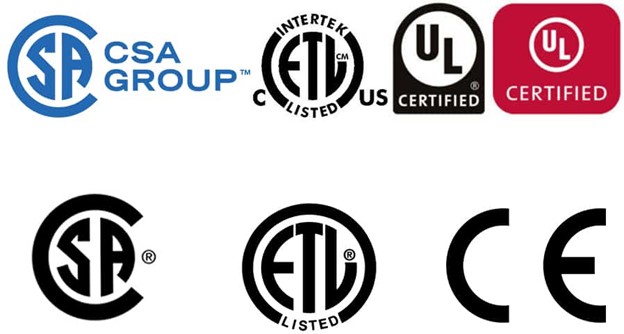
Lighting certifications do more than add a label to a product. They help confirm that lighting equipment has been tested for safety, compliance, and performance in commercial, industrial, and residential settings.
What should buyers know about lighting certifications?
Lighting certifications are marks that show a product has been tested against specific safety or performance standards. In the lighting industry, these certifications confirm that fixtures, components, and systems can be used safely in the environments for which they were designed.
For businesses, these marks can influence purchasing decisions, code compliance, risk management, and long-term product reliability. In many commercial and industrial settings, certified lighting products are preferred because they help demonstrate that safety testing has been conducted.
Underwriters Laboratories, commonly known as UL, is one of the best-known names in product safety testing. UL is a nonprofit organization and is recognized by OSHA as a Nationally Recognized Testing Laboratory, or NRTL. Its certifications are widely used to show that lighting products meet established safety standards.
UL certifications can apply to different types of products, components, systems, and use cases. That is why it is important to understand the specific UL mark attached to a lighting product.
UL Certified means a product, system, or service that has been evaluated and certified to meet UL safety standards. This designation can apply beyond finished products and may include ongoing verification to maintain compliance.
UL Listed is one of the most recognized certification marks in the market. It means a complete product has been tested for safety and found suitable for consumer or commercial use. This mark commonly appears on finished products such as light fixtures, appliances, smoke detectors, and similar electrical equipment. UL Listed products are generally tested for factors such as electrical safety, durability, mechanical reliability, and fire prevention.

UL Recognized applies to components rather than full end products. This mark is used for parts that will be installed within a larger system. In lighting, that could include internal fixture components designed for specific operating conditions, such as damp or humid environments.
UL Classified means a product has been tested for specific properties or limited-use applications. This designation is typically used when certification applies to a narrow set of criteria rather than broad, general-use product safety.
UL Performance Verified shows that a product has been tested against specific performance benchmarks. This mark can be helpful when performance consistency matters as much as baseline safety.
UL Listed is an official certification that confirms a product has been tested and meets established safety standards.
UL Rated is not an official designation. It is often used informally in marketing and does not guarantee that UL has tested a product.
UL Listed is the more reliable indicator because it reflects verified testing and compliance, making it the safer choice for businesses.
ETL stands for Electrical Testing Laboratories and is now part of Intertek. OSHA also recognizes ETL as an NRTL. Rather than creating its own standards, ETL tests products to confirm compliance with established standards from organizations such as UL and ANSI.
For lighting buyers in the United States and Canada, ETL is widely accepted as a trusted alternative to UL. If a product carries an ETL mark, it indicates that the product meets relevant North American safety requirements.
Choose Certified Lighting Solutions with Confidence
Understanding certification symbols in lighting is essential for selecting products that meet safety, performance, and efficiency standards. The right LED upgrade should not only improve lighting quality and reduce energy use, but also use properly certified products designed for long-term reliability.
Visit our LED Retrofit Solutions page to learn how Action Services Group delivers turn-key LED upgrades with quality product selection, expert installation, and measurable results.
When you’re ready, schedule a call with our lighting experts to discuss your facility’s lighting needs and the best certified LED solutions for your project.
👉 Explore LED Retrofit Solutions
👉 Schedule a Call with Our Lighting Experts
CSA International, formerly the Canadian Standards Association, is another recognized certification body used in North America. CSA is an NRTL and evaluates products against accepted safety standards from organizations such as ANSI, UL, and NSF.
In practice, CSA is often treated as comparable to UL and ETL for many lighting applications in the United States and Canada. That makes it a relevant certification for manufacturers, distributors, and facility teams sourcing compliant lighting products across North American markets.
The CE mark is required for many products sold in the European Economic Area. For lighting products, it indicates that the product meets applicable European requirements for safety, health, and environmental protection.
This mark is important for manufacturers, distributors, and businesses selling lighting in Europe. Products without proper CE compliance may face restrictions, penalties, or market removal. The CE mark should also not be confused with the similar-looking “China Export” symbol, which does not indicate compliance with European standards.
| Certification | Primary Market | What It Indicates | Common Use in Lighting |
| UL | United States and North America | Product or component tested to UL safety standards | Fixtures, components, and electrical products |
| ETL | United States and Canada | Product tested to established North American standards | Lighting products accepted as UL alternative |
| CSA | Canada and North America | Product evaluated to recognized safety standards | Fixtures and equipment for U.S. and Canadian markets |
| CE | European Economic Area | Product meets European safety, health, and environmental requirements | Lighting sold in Europe |
Lighting certifications matter because they help businesses reduce risk and improve compliance. In commercial and industrial environments, lighting products must align with safety requirements, building codes, and performance expectations.
Certified lighting can also support purchasing decisions by giving facility managers and procurement teams more confidence in the products they select. When lighting is installed in offices, warehouses, retail stores, parking lots, or outdoor areas, recognized certification marks can help confirm that the equipment has been tested for the conditions it may encounter.
Buyers should look beyond basic product descriptions and verify whether the lighting carries a recognized certification mark. The right certification may depend on where the product will be installed, the market in which it is sold, and whether it is a full fixture or an internal component.
When evaluating lighting products, it helps to ask:

What is the most common certification for lighting products?
UL Listed is one of the most recognized certifications for lighting products in North America, especially for complete finished products.
Is ETL the same as UL?
ETL is not the same organization as UL, but both are recognized testing bodies, and both marks are widely accepted in North America when products meet the applicable standards.
What is the difference between UL Listed and UL Recognized?
UL Listed applies to complete products, while UL Recognized applies to components used within a larger system.
Is CE required for lighting sold in Europe?
Yes. For many lighting products sold in the European Economic Area, CE marking is required to show compliance with applicable standards.
Does certified lighting matter for commercial buildings?
Yes. Certified lighting can help support code compliance, safety, and purchasing confidence in commercial environments.
Lighting certifications help buyers make safer and more informed decisions. Whether you are evaluating UL, ETL, CSA, or CE markings, these labels indicate whether a product has been tested to specific safety, compliance, and performance requirements.
If your business is reviewing lighting products for a retrofit, maintenance project, or new installation, choosing properly certified equipment can help reduce risk and support long-term reliability. Action Services Group can help you identify lighting products that align with your operational goals and project requirements. Speak to one of our experts today by calling 610-558-9773, emailing [email protected], or scheduling a call that fits your needs by clicking the button below.

When retrofitting your LEDs, lightbulbs have various illuminance. Theres different ways to measure the lighting of…
Understanding light measurements, luminance and foot-candle can help when choosing the perfect bulb for you next…
Exit signs and emergency lighting need to be in accordance with the NFPA, OSHA, and other…
When retrofitting your LEDs, lightbulbs have various illuminance. Theres different ways to measure the lighting of your next retrofit.
Understanding light measurements, luminance and foot-candle can help when choosing the perfect bulb for you next retrofit.
Exit signs and emergency lighting need to be in accordance with the NFPA, OSHA, and other state or local ordinances.