

What Is Predictive Maintenance for Commercial Lighting Systems? Benefits and…
Predictive maintenance for lighting systems uses equipment history, performance trends, and operating conditions to predict where…

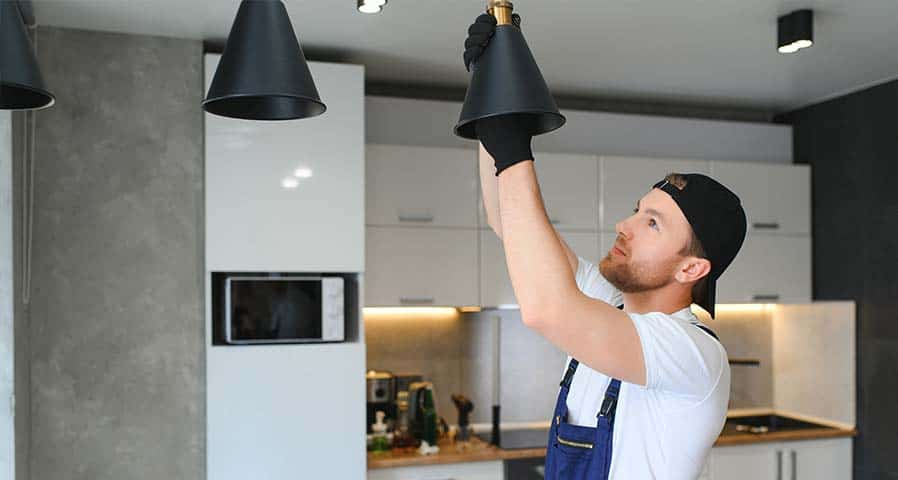
Predictive maintenance for lighting systems uses equipment history, performance trends, and operating conditions to predict where failures are likely and plan service before outages occur. For commercial facilities, it turns lighting maintenance data into decisions about inspections, repairs, and replacement budgets.
Predictive lighting maintenance combines historical work orders with available sensor and lighting control data. It can reduce unexpected interruptions, but it can’t predict every failure or guarantee an exact replacement date.
Effective planning starts with reliable records and a clear response process.
The difference is what triggers the work: a failure, a schedule, or evidence of increasing failure risk.
| Approach | Service trigger | Commercial lighting example |
| Reactive | Equipment has failed | Replace a driver after a warehouse aisle goes dark. |
| Preventive | A calendar or operating-hour interval | Inspect fixtures, clean lenses, and test controls on a planned schedule. |
| Predictive | Trends indicate increasing failure risk | Investigate drivers showing rising temperatures and repeated faults before similar units fail. |
These approaches work together. Preventive inspections still matter, and sudden failures still require reactive service. A condition alert flags an abnormal reading; prediction adds trend and history analysis to estimate future risk.
Commercial lighting predictive maintenance connects asset records with changing equipment conditions to prioritize service. Historical work orders reveal repeated repairs, short replacement intervals, and failure clusters by fixture model, circuit, or location.
Smart lighting maintenance adds operating data from temperature sensors, meters, and networked lighting controls (NLC). These can reveal unusual heat, consumption changes, and diagnostic events. Occupancy sensors and photocells alone generally do not diagnose driver health.
Compatible smart LED drivers and networked lighting controls can provide operating hours, energy use, temperature readings, and fault alerts. Facility managers can use this information to identify unusual conditions and prioritize inspections. Depending on the equipment and software installed, these records may be available through a building management system or centralized monitoring platform. Confirm which data your system can collect before building a maintenance plan around it.

Inventory fixtures, LED drivers, controls, mounting locations, installation dates, and circuit assignments where available. Pairing physical fixture audits with computerized maintenance management systems (CMMS) establishes the baseline asset tagging needed for scalable multi-site predictive modeling.
Review work orders for symptoms, replaced components, labor, access equipment, and technician findings. Repeated failures on one circuit warrant electrical investigation rather than assuming every fixture is defective.
Record normal operating hours, dimming settings, power consumption, temperatures where measurable, and representative light levels. Compare similar equipment under similar conditions.
Seasonal temperature increases or longer operating schedules can explain changing readings. LED lighting predictive maintenance needs that context to distinguish normal variation from deterioration. Update baselines after repairs or control changes.
Track available driver faults, cycling, temperature trends, and power consumption. The LED driver regulates power to the LEDs, so its condition matters as much as the light source itself.
Use driver case temperature monitoring at the manufacturer’s designated measurement point. Flicker, heat, and unusual consumption can reflect driver deterioration, control incompatibility, or supply problems. Circuit-level readings cannot automatically identify an individual faulty fixture.
Distinguish photometric degradation, meaning declining lighting performance, from electrical failure. IES LM-80 measures LED-source light-output maintenance over time; IES TM-21 projects long-term lumen maintenance from those measurements, subject to extrapolation limits. L70 means retaining 70% of initial light output.
These methods address LED-source degradation, not complete-fixture reliability. Driver electronics and electrolytic capacitors, where used, remain separate failure points affected by operating temperatures and electrical stress.
Set alert criteria using manufacturer limits, baseline trends, and professional judgment. Assign someone to review alerts, verify findings, and create work orders with locations, symptoms, required parts, and access needs.
Have qualified electrical personnel investigate suspected wiring, connection, or supply issues. Address hazardous conditions promptly rather than waiting for a convenient maintenance window.
Record the confirmed cause, completed work, and post-repair readings. Compare predicted problems with inspection findings to identify false alarms and missed failures.
Track emergency calls, repeat repairs, maintenance cost per fixture, and operational interruptions. Include monitoring expenses when evaluating results.
Understand LED Lifespan Before Planning Your Next Replacement
An LED fixture’s rated life does not guarantee years of uninterrupted operation. Driver reliability, operating hours, heat, and environmental conditions all influence when repairs or replacements become necessary. Understanding these factors helps facility managers interpret maintenance trends and build more realistic lighting budgets.
Explore our blog on commercial LED lifespan and rated life to learn what lifespan ratings mean and how actual operating conditions affect performance. Then, schedule a call with our lighting experts to discuss aging fixtures, recurring failures, and a maintenance or replacement plan for your facilities.
Predictive maintenance for LED lighting can lower costs when early findings allow teams to coordinate labor, parts, and access before urgent repairs become necessary.
In warehouses, bundling high-bay repairs and driver replacements can reduce repeated scissor-lift rentals, mobilization, and specialty labor. For example, reducing those combined expenses from $2,000 for separate emergency visits to $1,400–$1,600 for planned work represents 20%–30% savings. This is a budgeting example, not a verified industry benchmark.
Temperature management also matters. Keep driver case temperature (Tc) within the specific manufacturer’s limits. A stated 75°C lifetime reference and an 85°C maximum, for example, serve different purposes; neither is a universal threshold.
A common electrolytic-capacitor estimation rule suggests approximately half the life for each 10°C increase in capacitor operating temperature within the model’s valid range. It does not justify operation above rated limits or predict whole-driver life from case temperature alone.
Retail facilities can schedule work outside customer hours. Parking structures can prioritize failures along ramps and pedestrian routes while investigating moisture or electrical issues.
Multi-site properties gain value from consistent records that reveal repeated problems across locations. Start with high-impact areas and expand when measured benefits justify the investment. Savings depend on existing failure rates, access costs, and monitoring capabilities.
What Is Predictive Maintenance for Commercial Lighting Systems?
Predictive maintenance for commercial lighting is an analytics-driven maintenance strategy that leverages operational telemetry, sensor diagnostics, and historical work orders to forecast equipment failure before outages occur. It supports risk-based planning; an alert calls for evaluation rather than automatic equipment replacement.
What Is the Difference Between Preventive and Predictive Lighting Maintenance?
The difference between preventive and predictive lighting maintenance is the trigger: preventive maintenance follows calendar or runtime intervals, whereas predictive maintenance initiates service when diagnostic trends indicate elevated failure risk. Teams can adjust preventive schedules as conditions change.
Can LED Lighting Failures Be Predicted Before They Happen?
Some developing failures provide warning signs. Sudden surges, physical damage, and failures without measurable precursors may still cause unexpected outages.
What Technology Is Needed for Predictive Lighting Maintenance?
Sensor-enabled predictive lighting maintenance typically combines asset management software, such as a CMMS, with diagnostic hardware: networked lighting controls, compatible smart LED drivers, and Internet of Things (IoT) environmental sensors. D4i requires diagnostic-data features that are optional in DALI-2. Artificial intelligence can analyze patterns, but simpler programs can begin with service-history trends.
Can Existing Commercial Lighting Systems Support Predictive Maintenance?
Yes, particularly through service-history analysis and targeted measurements. Assess retrofit compatibility and available data before purchasing additional sensors or software.
How Does Predictive Maintenance Reduce Lighting Maintenance Costs?
It can improve budget timing and repair efficiency. Documented deterioration helps managers forecast replacement spending instead of treating every expense as unexpected.
How Can Businesses Implement Predictive Lighting Maintenance Across Multiple Locations?
Pilot the process at representative sites, standardize reporting, and assign local and central responsibilities before expanding. Compare locations using operating hours and equipment conditions, not failure counts alone.
Data-driven planning works best when professional inspections and coordinated service turn findings into action. Together, they support system reliability and more informed long-term facility budgets.
Action Services Group provides nationwide commercial lighting maintenance and electrical services. Our team can help translate audit findings and maintenance priorities into coordinated inspections, repairs, and turnkey national lighting service programs, with electrical services to investigate underlying power or connection problems. Schedule a call with our experts to discuss your facilities and maintenance priorities.
Predictive maintenance for lighting systems uses equipment history, performance trends, and operating conditions to predict where…

When retrofitting your LEDs, lightbulbs have various illuminance. Theres different ways to measure the lighting of…
Understanding light measurements, luminance and foot-candle can help when choosing the perfect bulb for you next…
Predictive maintenance for lighting systems uses equipment history, performance trends, and operating conditions to predict where failures are likely and…
When retrofitting your LEDs, lightbulbs have various illuminance. Theres different ways to measure the lighting of your next retrofit.
Understanding light measurements, luminance and foot-candle can help when choosing the perfect bulb for you next retrofit.