

What Are the Requirements for Exit Signs and Emergency Lighting?
Exit signs and emergency lighting need to be in accordance with the NFPA, OSHA, and other…

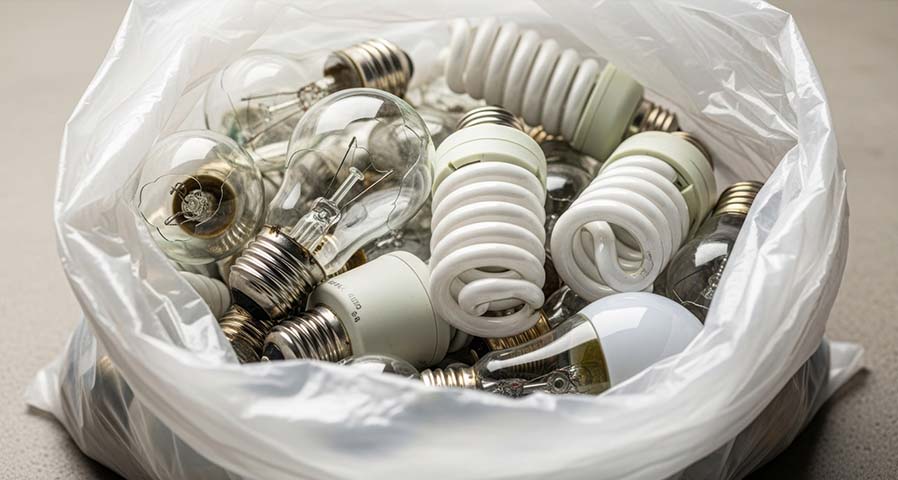
Across the United States, the phaseout of fluorescent and mercury-containing lighting is accelerating, marking a significant shift in how homes, businesses, and municipalities approach illumination. Ongoing federal and state actions, including HID lamp bans, are reinforcing a broader transition toward LED lighting as the safer, more efficient alternative. States such as Maine and Minnesota are playing a prominent role in this next chapter of bulb banning in the U.S.
Fluorescent lamps and many legacy high-intensity discharge lamps rely on mercury, a toxic element that poses serious environmental and public health risks. When these lamps break or are improperly disposed of, mercury can be released into the environment, where it may convert into methylmercury, a compound that accumulates in humans and wildlife. Even small amounts of exposure have been linked to neurological damage, cardiovascular disease, and long-term ecosystem contamination.
Because of these risks, regulators have increasingly focused on reducing mercury at the source. While recycling requirements have existed for years, compliance challenges and improper disposal have continued to drive policy changes that restrict the sale and distribution of mercury-containing bulbs altogether.
Bulb bans in Minnesota are among the most comprehensive in the country. The Minnesota Pollution Control Agency regulates the sale, distribution, and recycling of fluorescent and mercury-containing HID lamps. Certain lamps, including screw-base and bayonet-base CFLs, mercury vapor lamps, and mercury vapor ballasts, are already prohibited from sale.
Starting January 1, 2026, the restrictions expand further. Pin-base CFLs and linear fluorescent lamps, including straight and U-bend tubes, will also be banned from sale as new products. These rules apply broadly, covering retail stores, online marketplaces, private sellers, nonprofits, and businesses. Even new old stock and unused inventory falls under the ban.
Minnesota also requires that all mercury-containing lamps be recycled when discarded. Crushing or disposing of them in solid waste is prohibited, and both contractors and building owners share responsibility for proper handling and recycling. These measures reinforce the state’s intent to eliminate mercury risks while encouraging safer lighting technologies.
Bulb banning in Maine follows a similar trajectory. Legislation sponsored by Rep. Art Bell will prohibit the sale or distribution of mercury-added light bulbs beginning January 1, 2026. The law reflects growing concern about mercury pollution and its long-term impacts on water, wildlife, and human health.
Supporters of the legislation, including environmental and public health organizations, have emphasized that fluorescent lamps pose a significant risk when not recycled properly. In Maine, disposing of these bulbs in landfills or incinerators is already illegal, yet accidental releases continue to occur. The new ban aims to prevent mercury from entering the environment in the first place, while giving LED lighting a clear pathway to replace older technologies.
As fluorescent and HID lamp bans expand, LED lighting has emerged as the clear replacement. LEDs contain no mercury, last significantly longer, and consume far less energy. For consumers and businesses, this transition reduces electricity costs, maintenance expenses, and compliance concerns tied to hazardous materials.
The continuation of HID lamp bans and state-level bulb restrictions signals a long-term commitment to safer, more sustainable lighting. While existing fluorescent and HID lamps can still be used until the end of their life, the direction is clear: LEDs are becoming the national standard. As 2026 approaches, organizations that proactively transition to LED lighting will be better positioned to stay compliant, reduce risk, and benefit from modern, efficient illumination.
Read more at the Minnesota Pollution Control Agency and Maine.gov.

Exit signs and emergency lighting need to be in accordance with the NFPA, OSHA, and other…

Action Services Group has acquired Stouch Lighting to advance national LED upgrades, turnkey lighting solutions, LED…

Outsourcing lighting upgrades and maintenance needs improves tenant retention and boosts ROI for property managers.
Exit signs and emergency lighting need to be in accordance with the NFPA, OSHA, and other state or local ordinances.
Action Services Group has acquired Stouch Lighting to advance national LED upgrades, turnkey lighting solutions, LED retrofit services and lighting…
Outsourcing lighting upgrades and maintenance needs improves tenant retention and boosts ROI for property managers.