

Lighting Measurements – An In-depth Guide Part 1
When retrofitting your LEDs, lightbulbs have various illuminance. Theres different ways to measure the lighting of…

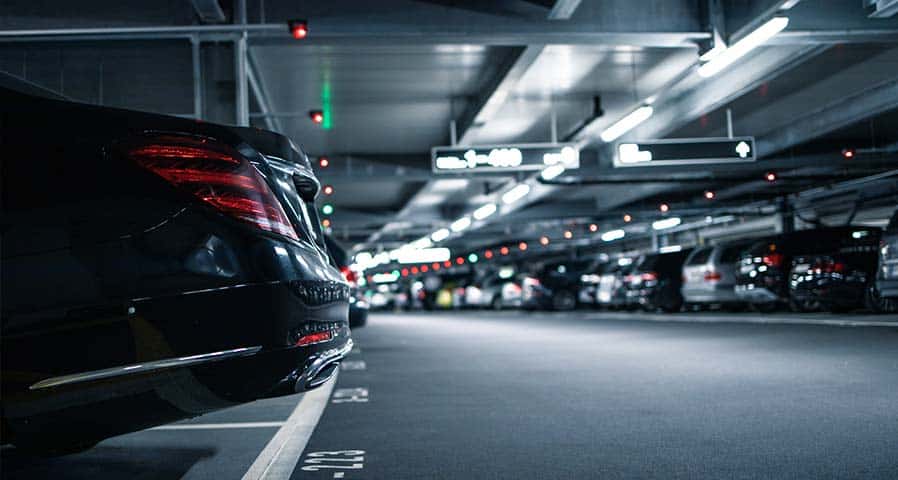
Commercial parking garage lighting requirements address illumination, uniformity, glare, emergency operation, and energy efficiency. Facility managers must evaluate each area separately because parking spaces, ramps, entrances, stairs, and pedestrian zones present different visibility challenges.
Current Illuminating Engineering Society guidance appears in ANSI/IES RP-8-25, Recommended Practice: Lighting Roadway and Parking Facilities, with applicable errata. Its recommendations support lighting design, while locally adopted building, fire, electrical, and energy codes establish enforceable requirements.
This guide focuses on lighting requirements and code standards. Part 1 examines the benefits of LED retrofits in parking garages.
A lighting evaluation should consider what drivers and pedestrians can see, how controls operate, and whether emergency systems perform correctly.
ANSI/IES RP-8-25 addresses parking garage lighting design in Chapter 17. Older specifications may reference RP-20, but new evaluations should identify the applicable current guidance.
IES recommendations do not automatically become law. They may become enforceable through regulations, project specifications, or contracts.
| Code or standard | Primary responsibility |
| ANSI/IES RP-8-25 | Parking facility illumination, distribution, visibility, and glare considerations |
| Adopted building and fire codes | Normal egress lighting, emergency illumination, and exit identification |
| National Electrical Code | Electrical installation and emergency system wiring |
| Adopted IECC or ASHRAE 90.1 provisions | Lighting power allowances and automatic controls |
| Local ordinances | Exterior glare, light trespass, and other location-specific restrictions |
Parking garage lighting regulations differ by state and municipality because jurisdictions adopt different editions and amendments. Requirements can also depend on whether work involves maintenance, an alteration, or new construction. Confirm applicability with the local building department or fire official.
Turn Parking Garage Lighting Requirements into a Smarter Upgrade Strategy
Understanding parking garage lighting requirements and standards is an important step toward creating a safer, more efficient, and reliable lighting environment. From maintaining appropriate light levels and uniformity to improving visibility and reducing maintenance demands, a well-planned lighting strategy can help facility managers address performance requirements while identifying opportunities for long-term energy and operational savings.
If you haven’t already, explore the first blog in our parking garage lighting series to learn how LED retrofits can improve lighting performance, reduce energy consumption, and lower maintenance costs. Then, connect with our lighting experts to discuss your parking facility’s current lighting conditions, upgrade opportunities, and long-term goals.
👉 Read: Parking Garage Lighting Retrofits: A Guide to LED Upgrades and Energy Savings
IES recommends different lighting levels based on the area and whether people or vehicles are present. These recommendations account for the light a system will provide as fixtures age and collect dirt, rather than only how bright it is when first installed.
Lighting needs to help people see both the ground and what is ahead of them:
The table below summarizes recommended minimum levels for covered parking garages during active use. Lux and foot-candles measure the amount of light reaching a surface. One foot-candle equals approximately 10.76 lux.
| Garage area | Minimum light on the ground | Minimum light on people and upright objects | Maximum bright-to-dark ratio |
| Parking spaces, driving lanes, corners, and ramps | 10 lux, about 0.93 fc | 5 lux, about 0.46 fc | 10:1 |
| Interior vehicle payment areas, valet stations, and pickup/drop-off zones | 10 lux, about 0.93 fc | 5 lux, about 0.46 fc | 10:1 |
| Elevator lobbies and pedestrian payment areas during typical use | 15 lux, about 1.39 fc | 8 lux, about 0.74 fc | 5:1 |
| Elevator lobbies and pedestrian payment areas during scheduled events | 40 lux, about 3.72 fc | 20 lux, about 1.86 fc | 5:1 |
| Vehicle entrances and exits during the day | 500 lux, about 46.5 fc | 250 lux, about 23.2 fc | 10:1 |
| Vehicle entrances and exits at night | 10 lux, about 0.93 fc | 5 lux, about 0.46 fc | 10:1 |
The bright-to-dark ratio describes how evenly light spreads across an area. A 10:1 ratio means the brightest measured spot has ten times as much light as the darkest. Lower ratios mean more even lighting.
Ground-level readings are taken at the floor. Readings for people and upright objects are taken about 5 feet above the floor, with the meter facing the directions specified in the standard.
In certain areas, IES allows lower lighting levels when no activity is detected: 2 lux on the ground and 1 lux vertically. This does not mean turning the lights off. Required exit-route lighting and security needs may limit how far the system can dim.

When drivers enter a garage from bright sunlight, their eyes need time to adjust to the darker space. Extra lighting near the entrance helps them see pedestrians, signs, gates, and other vehicles during that adjustment. At night, lighting should help drivers move between the garage and the street without a sudden change in brightness.
The amount of lighting and how far it extends into the garage depend on sunlight, traffic speed, and where drivers stop to collect tickets or pay. Each entrance and exit needs a lighting layout suited to those conditions.
Stairwell lighting must reveal tread edges, landings, handrails, and doors while satisfying adopted egress requirements.
Where the International Building Code applies, exit access stairs, exit stairs, and their required landings must have at least 10 fc at the walking surface when in use. Do not substitute lower IES pedestrian-stair recommendations for that requirement.
Pedestrian routes through parking bays also require visibility between vehicles and behind columns. Elevator approaches and payment areas should receive their appropriate task-specific treatment.
Uniformity describes the variation between measured light levels. Calculate a maximum-to-minimum ratio by dividing the highest reading by the lowest within the defined evaluation area.
For example, 8 fc divided by 0.5 fc equals 16:1. That exceeds a 10:1 target even though some locations appear bright.
Evaluate horizontal and vertical uniformity separately. An average reading can conceal dark spots, and an average-to-minimum ratio cannot replace a maximum-to-minimum calculation.
Glare can further reduce visibility when bright fixtures sit directly in a driver’s sightline. Appropriate shielding, optics, mounting positions, and spacing help control it. Inspect ramps, intersections, and pedestrian crossings from actual viewing positions.
Upgrade Your Parking Garage Lighting with Confidence
Meeting parking garage lighting requirements involves more than maintaining adequate illumination. Proper fixture selection, light distribution, uniformity, and reliable performance all contribute to a safer, more functional parking environment. A strategically planned LED retrofit can help facility managers address lighting performance needs while reducing energy consumption, minimizing maintenance requirements, and improving long-term operating efficiency.
Explore our LED Retrofit Solutions to see how Action Services Group helps commercial property owners and facility managers modernize parking garage lighting systems through comprehensive planning, product selection, and professional installation. Then, connect with our lighting experts to discuss your facility’s lighting requirements and opportunities to improve performance while maximizing long-term savings.
Required emergency lighting is governed by separate criteria. Commonly adopted IBC provisions require initial illumination of at least 1 fc average and 0.1 fc minimum along the egress path at floor level, with emergency power lasting at least 90 minutes. Additional uniformity and end-of-duration criteria apply.
Energy codes may require occupancy-based reductions, daylight-responsive dimming, and separate entrance-transition controls. Settings depend on the adopted edition and applicable exceptions.
Test detection coverage, response time, and dimmed conditions. A sensor that misses someone behind a column can undermine an otherwise adequate design.
Does DLC Qualification Establish Lighting Compliance?
No. DesignLights Consortium qualification evaluates product performance and may support rebate eligibility. It does not establish whether an installed garage meets illumination or code requirements.
Should an Uncovered Rooftop Deck Use the Interior Garage Criteria?
No. RP-8 treats an open top level as a parking lot. Evaluate its mounting, weather exposure, and exterior lighting conditions separately.
Can Lighting Changes Affect Security Camera Performance?
Yes. Changes in contrast, glare, and light distribution can affect the detail recorded. Review camera images after commissioning, particularly around transaction areas and access points.
A lighting audit can help determine whether your garage needs routine maintenance, controls adjustments, or an LED retrofit. Measuring light levels and checking fixture condition can reveal problems that a visual inspection alone may miss.
Contact Action Services Group to schedule a parking garage lighting evaluation. Our team can help identify deficiencies and recommend lighting services or upgrades that support visibility, reliable operation, and energy efficiency. Reach out today by calling 610-558-9773, emailing [email protected], or scheduling a call that fits your needs by clicking the button below.

When retrofitting your LEDs, lightbulbs have various illuminance. Theres different ways to measure the lighting of…

Understanding light measurements, luminance and foot-candle can help when choosing the perfect bulb for you next…

Exit signs and emergency lighting need to be in accordance with the NFPA, OSHA, and other…
When retrofitting your LEDs, lightbulbs have various illuminance. Theres different ways to measure the lighting of your next retrofit.
Understanding light measurements, luminance and foot-candle can help when choosing the perfect bulb for you next retrofit.
Exit signs and emergency lighting need to be in accordance with the NFPA, OSHA, and other state or local ordinances.