

Lighting Measurements – An In-depth Guide Part 1
When retrofitting your LEDs, lightbulbs have various illuminance. Theres different ways to measure the lighting of…

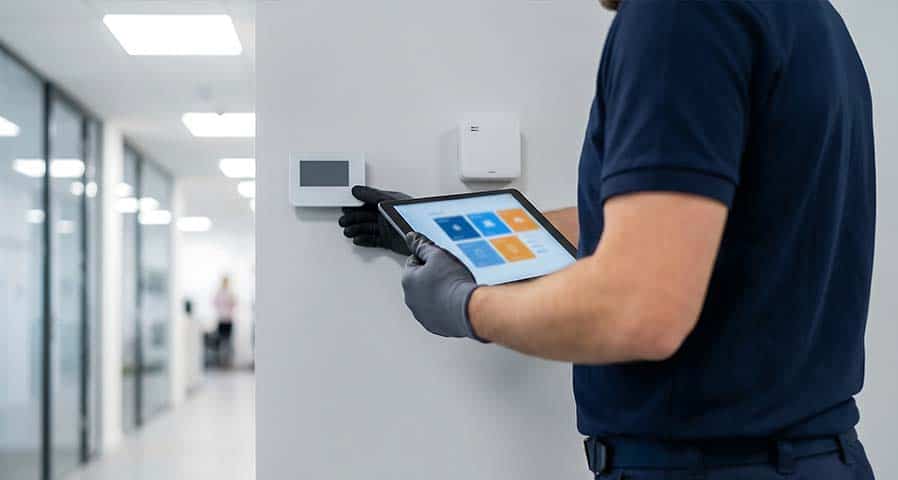
Commercial facilities are becoming smarter, more connected, and more data-driven. From office buildings and healthcare campuses to warehouses and manufacturing facilities, organizations are investing in smart building technology to improve efficiency, lower operating costs, and create better environments for occupants.
Measurable results are driving this shift. According to the International Energy Agency (IEA), digital optimization technologies can deliver up to 40% energy savings without replacing existing building equipment, simply by managing systems more effectively. As energy costs continue to rise, smart building systems are helping facility managers maximize performance from existing assets while reducing waste.
By combining sensors, software, automation, and analytics, intelligent buildings can monitor conditions in real time and automatically adjust operations to improve efficiency, comfort, and sustainability.
A smart building is a facility that uses connected technologies, automation, and data analytics to improve operational performance, energy efficiency, occupant comfort, and security.
Unlike traditional buildings that rely heavily on manual controls and fixed schedules, smart buildings continuously collect information from equipment and environmental sensors. The data is analyzed in real time and automatically used to adjust building systems based on current conditions.
For example, a smart office building can reduce HVAC output when conference rooms are unoccupied, dim lighting when sufficient daylight is available, or alert maintenance teams when equipment performance begins to decline. These capabilities allow facilities to operate more efficiently while improving the overall occupant experience.
Smart buildings work by connecting building systems through a network of sensors, software platforms, and automation controls.
Sensors gather information about occupancy, temperature, humidity, lighting levels, air quality, and equipment performance. This data is transmitted to a central platform, often a Building Automation System (BAS) or Building Management System (BMS), where it is analyzed and used to make operational decisions.
The process typically follows five steps:
This continuous feedback loop allows buildings to respond dynamically to changing conditions while minimizing waste and inefficiencies.

Several technologies work together to create a modern smart building ecosystem.
Building automation systems serve as the central control platform for intelligent buildings. A BAS integrates HVAC systems, lighting controls, security systems, access control, and energy management tools into a single interface.
IoT sensors provide the real-time data that powers smart building systems. These devices monitor occupancy, temperature, humidity, motion, lighting conditions, air quality, and equipment performance.
Smart lighting systems use occupancy sensors, daylight harvesting, scheduling, and networked controls to reduce energy consumption while maintaining proper illumination.
Advanced HVAC systems automatically adjust heating, cooling, and ventilation based on occupancy patterns, environmental conditions, and energy management goals.
Predictive maintenance platforms monitor equipment performance and identify issues before failures occur, helping reduce downtime and maintenance costs.
Cloud-based software platforms collect building data, identify trends, generate reports, and provide recommendations for improving efficiency and performance.
| Technology | Primary Function | Common Applications |
| Building Automation Systems (BAS) | Centralized monitoring and control | HVAC, lighting, security, energy management |
| IoT Sensors | Collect real-time building data | Occupancy, temperature, air quality monitoring |
| Smart Lighting Systems | Reduce energy use and improve visibility | Daylight harvesting, occupancy controls |
| Smart HVAC Systems | Optimize comfort and efficiency | Automated heating, cooling, and ventilation |
| Access Control Systems | Improve security and visibility | Keycards, biometrics, visitor management |
| Predictive Maintenance Software | Prevent equipment failures | HVAC, electrical, and mechanical systems |
| Cloud Analytics Platforms | Analyze operational performance | Energy reporting and benchmarking |
| Environmental Monitoring Systems | Improve indoor conditions | Air quality, humidity, temperature monitoring |
Smart building technology significantly reduces energy consumption by ensuring systems operate only when needed.
The U.S. Department of Energy reports that high-performance building control systems can reduce HVAC energy use by approximately 30% in commercial buildings. The agency also estimates that widespread deployment of advanced building controls could reduce total U.S. energy consumption by more than 3%.
These savings are achieved through automated scheduling, occupancy-based controls, optimized HVAC operation, and continuous system monitoring.
Smart building systems continuously monitor indoor conditions and automatically adjust temperature, ventilation, and lighting levels to create more comfortable environments.
By responding to actual occupancy and environmental conditions, facilities can improve employee productivity, tenant satisfaction, and visitor experiences.
Facility managers gain access to real-time data from multiple building systems through centralized dashboards and reporting tools.
This visibility helps organizations identify inefficiencies, benchmark performance, and make more informed operational decisions.
Integrated security systems enhance building protection through automated access control, surveillance, intrusion detection, and real-time alerts.
These technologies help protect occupants, assets, and critical infrastructure.
Predictive maintenance tools can identify potential equipment issues before they become major failures.
By addressing problems early, organizations can reduce emergency repairs, extend equipment lifespan, and improve overall asset reliability.
Many organizations use smart building systems to support carbon reduction initiatives and sustainability goals.
Because smart technologies optimize existing systems, facilities can often achieve substantial efficiency improvements without major capital equipment replacements.
Start Building a Smarter Facility
Smart building technologies deliver the greatest value when you understand how intelligent lighting controls fit into your overall building strategy. Whether you’re looking to reduce energy costs, improve occupant comfort, or gain greater operational visibility, lighting controls are often the foundation of a smarter facility.
Download our free eBook, A Guide to Lighting Control Systems for Commercial Spaces, to learn how today’s lighting control technologies can support your smart building goals and help you make informed decisions for future upgrades.
When you’re ready, schedule a call with our lighting controls experts to discuss your facility, automation objectives, and opportunities to implement a smarter, more efficient lighting system.
👉 Download the Free eBook: A Guide to Lighting Control Systems for Commercial Spaces
👉 Schedule a Call with Our Lighting Controls Experts
Smart buildings reduce energy costs by continuously optimizing how building systems operate.
Rather than relying on fixed schedules, intelligent buildings adjust lighting, HVAC systems, and other equipment based on real-time occupancy and environmental conditions. This prevents unnecessary energy consumption while maintaining comfort and performance.
Research supports these savings. A systematic review published in MDPI found that integrating IoT sensor networks into a Building Management System can reduce total building energy consumption by up to 30% while lowering operating expenses by approximately 20%. The study specifically highlighted the effectiveness of IoT-based lighting controls and automated shading systems in reducing energy waste.
The International Energy Agency also notes that many buildings continue to waste energy because systems are not aligned with actual occupancy patterns. Digital optimization technologies address this challenge by automatically adjusting operations to match real-world usage.
When combined with LED lighting upgrades and networked lighting controls, smart building technology can deliver even greater energy and operational savings.
Office facilities use smart building systems to improve employee comfort, manage meeting spaces, optimize energy consumption, and support hybrid workplace strategies.
Large industrial facilities often implement smart lighting, occupancy controls, and environmental monitoring systems to reduce operating costs and improve efficiency.
Hospitals and medical campuses use intelligent building technologies to maintain critical environmental conditions, improve security, and support patient comfort.
Schools and universities deploy smart building systems to improve indoor air quality, lower utility expenses, and enhance campus safety.
Industrial environments often leverage predictive maintenance, environmental monitoring, and building automation systems to improve equipment reliability and operational performance.
What is a smart building?
A smart building is a facility that uses connected technologies, automation, sensors, and analytics to improve efficiency, comfort, security, and overall building performance.
How do smart buildings work?
Smart buildings collect real-time data from sensors and connected devices, analyze it using software platforms, and automatically adjust building systems based on current conditions.
What technologies are used in smart buildings?
Common smart building technologies include building automation systems, IoT sensors, smart lighting controls, smart HVAC systems, predictive maintenance software, cloud analytics platforms, and intelligent security systems.
What are the benefits of smart building technology?
Smart building technology can reduce energy costs, improve occupant comfort, enhance security, lower maintenance expenses, increase operational visibility, and support sustainability initiatives.
How can smart buildings reduce energy costs?
Smart buildings reduce energy costs by automatically optimizing HVAC systems, lighting controls, and other energy-consuming equipment based on occupancy, environmental conditions, and real-time operational data.
Implementing smart building technology requires more than installing connected devices—it requires a strategic approach that aligns building systems, energy goals, and operational needs. Action Services Group helps organizations identify opportunities for smart lighting, building automation, energy-efficient upgrades, and facility modernization programs that improve performance and reduce costs.
Whether you’re planning a facility-wide retrofit, upgrading lighting controls, or exploring smart building technologies for the first time, Action Services Group can help develop and execute a solution that supports your long-term operational and sustainability goals. Contact Action Services Group to learn how smart building solutions can transform your commercial facility. To speak with one of our specialists, call 610-558-9773, email [email protected], or schedule a call that fits your needs by clicking the button below.
When retrofitting your LEDs, lightbulbs have various illuminance. Theres different ways to measure the lighting of…

Understanding light measurements, luminance and foot-candle can help when choosing the perfect bulb for you next…

Exit signs and emergency lighting need to be in accordance with the NFPA, OSHA, and other…
When retrofitting your LEDs, lightbulbs have various illuminance. Theres different ways to measure the lighting of your next retrofit.
Understanding light measurements, luminance and foot-candle can help when choosing the perfect bulb for you next retrofit.
Exit signs and emergency lighting need to be in accordance with the NFPA, OSHA, and other state or local ordinances.