

Lighting Measurements – An In-depth Guide Part 1
When retrofitting your LEDs, lightbulbs have various illuminance. Theres different ways to measure the lighting of…

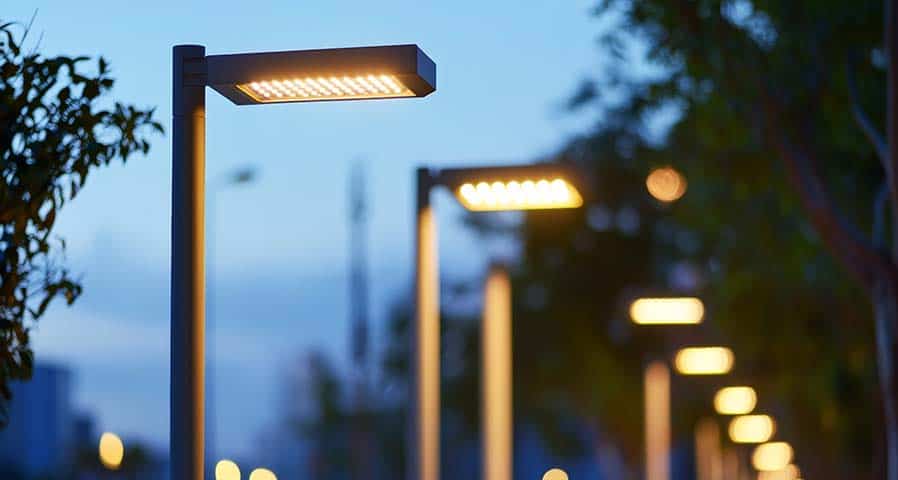
Replacing aging high-pressure sodium (HPS) and metal halide fixtures with LED street lights is one of the most impactful infrastructure upgrades municipalities and commercial property owners can make. Today’s municipal LED lighting systems deliver significant energy savings, lower maintenance requirements, improved nighttime visibility, and compatibility with smart lighting technologies that further reduce operating costs.
While roadways remain the primary application, the same advantages apply to parking lots, campuses, parks, pedestrian walkways, industrial facilities, and other commercial exterior lighting systems.
The biggest benefits of LED street lighting extend well beyond energy efficiency. Modern LED fixtures improve lighting performance while lowering the total cost of ownership throughout the system’s lifecycle.
These advantages make LED street lighting an attractive investment for municipalities, campuses, commercial properties, healthcare facilities, and industrial sites.
One of the primary reasons organizations invest in municipal LED lighting is the opportunity for substantial energy savings.
LED fixtures consume significantly less electricity than legacy HPS and metal halide systems while producing higher-quality illumination. Combined with precise optical control that places light only where it is needed, municipalities can reduce wasted light while lowering utility costs.
When paired with adaptive lighting strategies such as scheduled dimming or occupancy-based control, additional energy savings can often be achieved without compromising roadway or pedestrian safety.
Lower LED streetlight maintenance costs are another major contributor to long-term operating savings.
Traditional street lighting systems require routine lamp and ballast replacements, creating recurring labor costs, bucket truck dispatches, traffic control expenses, and equipment downtime. Modern LED fixtures are designed with operating lives that commonly exceed 50,000 to 100,000 hours, dramatically reducing maintenance frequency.
The result includes:
For municipalities managing hundreds or thousands of fixtures, reducing maintenance can represent one of the largest financial benefits of an LED conversion.
Lighting quality is just as important as lighting quantity.
Lighting quality is just as important as lighting quantity. Unlike older HPS fixtures that produce a yellow-orange glow, LED streetlights feature a high Color Rendering Index (CRI). This dramatically improves color accuracy, depth perception, and nighttime contrast—making it easier for drivers, pedestrians, cyclists, and security personnel to spot hazards, roadway markings, and vehicles.
Benefits include:
Well-designed LED lighting systems can also support crime deterrence by improving visibility in public spaces, parking lots, parks, and commercial properties.
Modern connected lighting systems allow municipalities to maximize the value of their lighting infrastructure.
Many LED street lights can integrate with:
Rather than operating every fixture at full output throughout the night, smart controls automatically adjust lighting levels based on traffic patterns, occupancy, or time of day. These technologies help reduce energy consumption while extending fixture life and providing maintenance alerts before failures occur.
Aston Township partnered with Stouch Lighting to modernize its municipal street lighting infrastructure by replacing aging fixtures with high-performance LED streetlights.
The project produced measurable operational improvements, including:
The project demonstrates how municipalities can achieve both immediate LED street lighting energy savings and long-term maintenance reductions while improving public safety.
Why are municipalities replacing HPS streetlights with LEDs?
Municipalities are replacing HPS streetlights with LEDs because they reduce energy consumption, lower maintenance costs, improve lighting quality, and provide longer fixture life, resulting in lower total operating costs.
Can LED streetlights reduce crime?
While lighting alone cannot prevent crime, brighter, more uniform LED illumination can improve visibility for pedestrians, drivers, law enforcement, and surveillance cameras, supporting safer public spaces.
What is the lifespan of LED streetlights?
Most commercial and municipal LED streetlights are rated for approximately 50,000 to 100,000 hours, allowing them to operate for many years before replacement under normal conditions.
What types of exterior lighting benefit from LED technology?
In addition to roadways, LED technology is commonly used for parking lots, campuses, parks, sidewalks, building perimeters, loading docks, industrial facilities, sports complexes, and security lighting.
Are LED streetlights worth the investment?
For most municipalities and commercial property owners, LED streetlights deliver strong long-term value through lower operating costs, reduced maintenance expenses, improved public safety, and available utility rebate programs. Many LED street lighting projects achieve a typical payback period of approximately 18 to 36 months, depending on operating hours, electricity rates, maintenance savings, and available incentives, making them a strong long-term investment.
The growing adoption of LED streetlights reflects the growing standard for energy efficiency, cost savings, and above all, community safety. Today’s municipal LED lighting solutions provide measurable benefits throughout the life of the installation.
Whether upgrading city streets, parking lots, campuses, or other exterior spaces, organizations can reduce operating costs, minimize maintenance demands, enhance public safety, and position their facilities for future smart city technologies while maximizing the long-term benefits of LED street lighting.
Click here to read the full article, originally published November 28, 2023, by LED Light Expert.
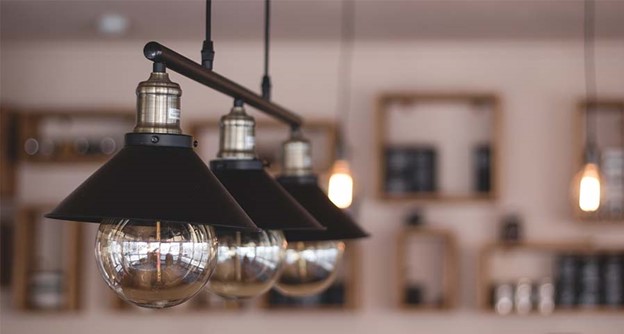
When retrofitting your LEDs, lightbulbs have various illuminance. Theres different ways to measure the lighting of…
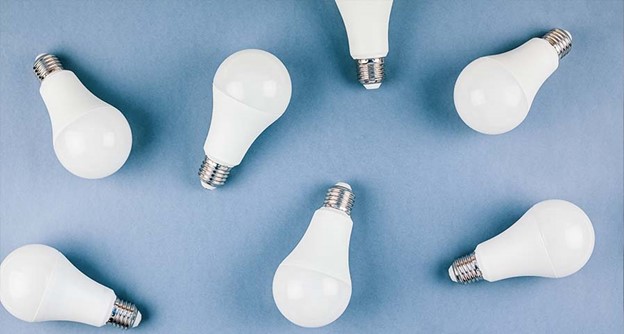
Understanding light measurements, luminance and foot-candle can help when choosing the perfect bulb for you next…

Exit signs and emergency lighting need to be in accordance with the NFPA, OSHA, and other…
When retrofitting your LEDs, lightbulbs have various illuminance. Theres different ways to measure the lighting of your next retrofit.
Understanding light measurements, luminance and foot-candle can help when choosing the perfect bulb for you next retrofit.
Exit signs and emergency lighting need to be in accordance with the NFPA, OSHA, and other state or local ordinances.