

Lighting Measurements – An In-depth Guide Part 1
When retrofitting your LEDs, lightbulbs have various illuminance. Theres different ways to measure the lighting of…


Facility managers often hear BMS vs BAS used interchangeably, but the distinction directly impacts how buildings are controlled, optimized, and scaled. Understanding how each system functions helps you make smarter decisions around energy efficiency, integration, and long-term performance.
What is the difference between BMS and BAS, and which one is right for your facility?
Buildings are smarter than ever. From HVAC optimization to real-time energy tracking, today’s facilities rely on connected systems to improve performance, reduce costs, and support sustainability goals. One question continues to surface: What is the difference between a Building Management System and a Building Automation System?
While these terms are often used interchangeably, understanding the BMS vs BAS difference is essential for facility managers evaluating upgrades, integrations, and long-term operational strategy.
A Building Automation System (BAS) automates and controls key building systems, especially those related to comfort and energy use.
At its core, a BAS uses a network of sensors, controllers, actuators, and programmable logic controllers (PLCs) to monitor and adjust HVAC and lighting systems in real time. These components communicate via standardized protocols such as BACnet, Modbus, and LonWorks, enabling devices from different manufacturers to work together within the same system.
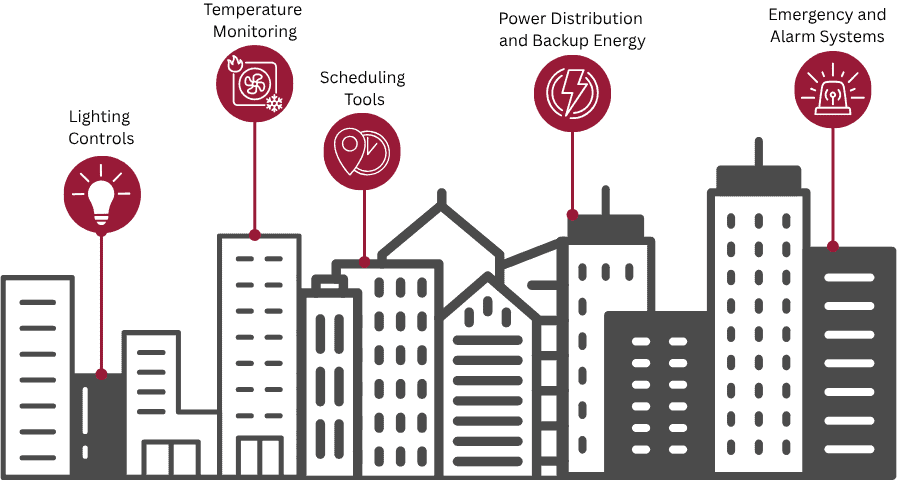
Typical BAS components include:
A BAS improves operational consistency and reduces energy waste. It can automatically adjust temperature setpoints, optimize airflow, and reduce unnecessary runtime based on real-time data inputs. In commercial building automation, this level of control directly impacts utility costs, equipment lifespan, and occupant comfort.
A Building Management System (BMS) takes a broader approach by integrating multiple building systems into one centralized platform.
A BMS acts as the command center of a facility. It aggregates data from various subsystems, including those managed by a BAS, and presents it through a unified interface for monitoring, control, and analytics.
A BMS typically integrates:
Like BAS, a BMS relies on communication protocols such as BACnet, Modbus, and LonWorks to connect systems. However, the key difference is scale. A BMS coordinates communication across multiple subsystems, ensuring that data flows between devices, controllers, and software platforms seamlessly.
For example, occupancy data captured by security sensors can be shared with HVAC controllers to adjust airflow, while fire alarm systems can override standard operations to support emergency response. This level of integration allows facility managers to make faster, more informed decisions.
| Category | BAS (Building Automation System) | BMS (Building Management System) |
| Scope | Focuses on specific systems like HVAC and lighting | Oversees the entire building and multiple subsystems |
| Integration | Integrates components within a single system | Connects multiple systems into one centralized platform |
| Complexity | Simpler setup with fewer systems, sensors, and controllers | More complex with multiple systems, protocols, and hardware layers |
| User Experience | Provides system-specific data and controls | Provides a full building overview across systems |
| Energy Impact | Directly improves energy efficiency through HVAC and lighting control | Improves efficiency through system coordination and shared data |
In most modern facilities, BAS and BMS are not competing systems. They work together.
A BAS typically manages HVAC and lighting through sensors, actuators, and PLC-based controllers. A BMS sits above it, integrating that data with other systems to provide a complete operational picture.
For example:
This layered architecture is a cornerstone of commercial building automation, especially in large or complex environments where system coordination is critical.
The confusion around Building Management System vs Building Automation System comes from how the industry has evolved.
Some key factors:
In practice, the distinction matters less than the system’s capabilities. Facility managers should focus on interoperability, hardware compatibility, and scalability rather than terminology alone.
Plan Your Smart Building Infrastructure the Right Way
Understanding the difference between a Building Management System (BMS) and a Building Automation System (BAS) is an important step toward improving efficiency, visibility, and control across your facility. Implementing these systems often requires electrical infrastructure upgrades, integration planning, and experienced project management.
Visit our Electrical Project Solutions page to learn how Action Services Group supports smart building initiatives, system integrations, and electrical infrastructure modernization. When you’re ready, schedule a call with our experts to discuss your facility goals and determine the best approach for your building automation strategy.
👉 Explore Electrical Project Solutions
👉 Schedule a Call with Our Experts
The right system depends on your building’s size, complexity, and operational goals.
Choose a BAS if:
Choose a BMS if:
Facilities such as hospitals, data centers, and multi-building campuses often benefit from a BMS due to their complexity and need for system-wide coordination.
Commercial building automation continues to evolve with advancements in IoT, AI, and predictive analytics.
Modern systems now leverage:
These innovations allow buildings to become more adaptive, efficient, and responsive. As a result, the line between BMS and BAS continues to blur, with both systems becoming part of a larger, connected ecosystem.

Is BMS the same as BAS?
No, but they are closely related. A BAS focuses on automating specific systems, such as HVAC and lighting, while a BMS integrates multiple building systems into a centralized platform.
What protocols do BAS and BMS use?
Most systems rely on open communication protocols such as BACnet, Modbus, and LonWorks. These protocols allow sensors, controllers, and devices from different manufacturers to communicate effectively.
What hardware is used in building automation systems?
Common hardware includes sensors (temperature, occupancy, air quality), actuators (valves, dampers), programmable logic controllers (PLCs), and control panels that manage system operations.
Which is better: BMS or BAS?
Neither is inherently better. A BAS is ideal for targeted system control, while a BMS is better for facilities that require full system integration and centralized oversight.
Can a building have both a BMS and BAS?
Yes. Many facilities use a BAS for system-level automation and a BMS for centralized monitoring and integration across systems.
Understanding the difference between BMS vs BAS is key to making smarter decisions about your building’s performance, energy use, and long-term scalability. Whether you need targeted automation or full system integration, the right system can significantly improve efficiency, reduce operational costs, and enhance control.
If you are evaluating commercial building automation or planning system upgrades, Action Services Group can help you assess your facility, identify opportunities, and implement the right solution. Connect with Action Services Group to start optimizing your building systems today. To contact us, call 610-558-9773, email [email protected], or schedule a consultation that fits your needs.

When retrofitting your LEDs, lightbulbs have various illuminance. Theres different ways to measure the lighting of…

Understanding light measurements, luminance and foot-candle can help when choosing the perfect bulb for you next…

Exit signs and emergency lighting need to be in accordance with the NFPA, OSHA, and other…
When retrofitting your LEDs, lightbulbs have various illuminance. Theres different ways to measure the lighting of your next retrofit.
Understanding light measurements, luminance and foot-candle can help when choosing the perfect bulb for you next retrofit.
Exit signs and emergency lighting need to be in accordance with the NFPA, OSHA, and other state or local ordinances.
One Response