

Outsourcing Maintenance & Lighting Upgrades: How Property Managers & MUDs…
Outsourcing lighting upgrades and maintenance needs improves tenant retention and boosts ROI for property managers.

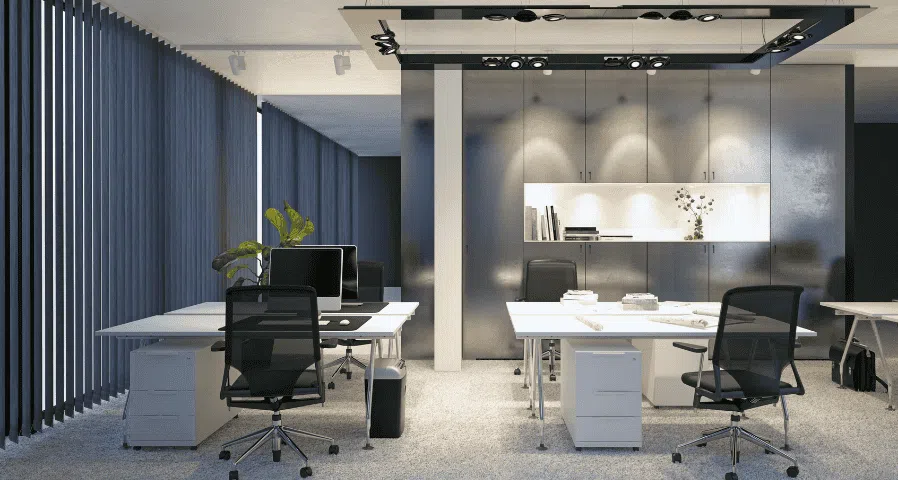
When designing a commercial space in 2026, lighting is used as a strategic tool that shapes perception, supports productivity, reinforces brand identity, and enhances occupant well-being. One of the most important elements of lighting design is correlated color temperature (CCT), which influences how warm or cool a space feels and how accurately colors are rendered. With the rise of LED upgrades, smart controls, and AI-powered lighting control technology, businesses now have more flexibility than ever to fine-tune lighting environments for both performance and experience.
Correlated color temperature refers to the visual “warmth” or “coolness” of light and is measured in Kelvins (K). Lower values, typically between 2000K and 3000K, produce warm, yellowish tones similar to candlelight or traditional incandescent lamps. Higher values, ranging from 4000K to 6500K, create cooler, bluish-white light that resembles daylight. This spectrum allows designers to match lighting to the function and emotional tone of each space.
In commercial settings, the right CCT can influence customer behavior, employee focus, and even perceived cleanliness and safety. Warm light tends to encourage relaxation and longer dwell times. In contrast, cooler light supports alertness, visual acuity, and task performance. In 2026, tunable LED systems and AI-powered lighting control technology allow these temperatures to shift dynamically throughout the day, aligning lighting conditions with circadian rhythms and operational needs.
While CCT determines the color of the light itself, the Color Rendering Index (CRI) measures how accurately that light reveals the true colors of objects. A high CRI is essential in environments where appearance matters, such as retail, hospitality, healthcare, and food service. Proper pairing of CCT and CRI ensures that merchandise looks vibrant, food appears appetizing, and architectural finishes maintain their intended tone. For example, warm wood surfaces and rich fabrics are enhanced by lower CCT lighting, while modern metallic or white interiors often benefit from neutral to cool tones.

Different commercial environments benefit from different color temperature ranges based on their function: Different commercial and industrial environments require different color temperature ranges based on visual tasks, safety needs, brand experience, and human performance. In 2026, advanced LED systems combined with AI-powered lighting control technology allow these environments to dynamically adapt lighting conditions by time of day, occupancy, and operational demands.
Exterior lighting and parking structures typically use 3000K to 5000K to balance visibility, safety, and security. Cooler temperatures improve contrast for cameras and wayfinding. At the same time, warmer 3000K systems are increasingly used to reduce glare and light pollution in urban areas while maintaining compliance with local dark-sky ordinances.
Retail environments usually fall between 2700K and 4000K, depending on brand positioning. Fashion and boutique stores often favor warmer 3000K lighting for a premium feel, while grocery and big-box retail lean toward 3500K to 4000K to enhance product clarity and cleanliness. AI-powered lighting control technology can dynamically adjust accent lighting to highlight promotional displays and optimize dwell time.
Fine dining commonly uses 1800K to 2700K for an intimate ambiance, while casual dining and quick-serve restaurants operate in the 2700K to 3500K range for a brighter, more energetic environment. Kitchens rely on 4000K to 5000K for task accuracy and food safety.
Hotel lighting will change depending on the space and its use. Lobbies, lounges, and corridors typically use 2700K to 3000K for warmth and comfort, while guest rooms balance 2700K to 3000K for relaxation with cooler task lighting at desks and vanities. Conference areas often shift to 3500K to 4000K to support alertness during meetings.
Office spaces perform best with neutral white lighting between 3000K and 4000K. This range supports visual comfort, reduces fatigue, and improves focus. AI-powered lighting control technology enables circadian-based tuning, providing cooler light in the morning and warmer tones later in the day.
Match Color Temperature to Performance
Choosing the right color temperature isn’t just about aesthetics, it impacts visibility, productivity, safety, and customer experience across every industry. Learn how LED Retrofits and Lighting Controls work together to deliver the right light levels, flexibility, and control for each application.
When you’re ready, schedule a call with our lighting experts to review your facilities and determine the optimal color temperature strategy for your industry, spaces, and operating hours.
👉 Explore LED Retrofit Solutions
👉 Learn About Lighting Control Solutions
👉 Schedule a Call with a Lighting Expert
Hospitals, clinics, and labs typically require 3500K to 5000K to support visual acuity, color accuracy, and clinical precision. Surgical suites and examination rooms often operate at the higher end of this range, while patient rooms may incorporate tunable systems that shift to warmer tones for recovery and rest.
Classrooms, libraries, and laboratories generally use 3500K to 5000K to promote alertness and concentration. In comparison, cafeterias and common areas often adopt warmer 3000K to 3500K lighting for comfort and social interaction.
Warehouses benefit from cooler color temperatures between 4000K and 5000K to improve visibility, contrast, and safety in high-bay environments. These cooler tones enhance depth perception, barcode scanning accuracy, and forklift navigation. When paired with AI-powered Lighting Control Technology, lighting can automatically dim or shift zones based on occupancy, aisle activity, and daylight penetration, significantly reducing energy consumption while maintaining compliance with OSHA and IES light level standards.
Industrial production floors, assembly lines, and maintenance areas typically use 4000K to 5000K lighting to support precision work, quality control, and hazard recognition. High CRI combined with cooler color temperatures improves defect detection and reduces visual errors. Smart controls and AI-driven analytics can further optimize lighting levels by process, shift schedules, and machine operation, enhancing both safety and productivity.
Airports, transit stations, and loading docks commonly use 3500K to 5000K for wayfinding, security visibility, and operational clarity. Tunable systems allow warmer tones in passenger areas and cooler light in operational zones.
By aligning color temperature with industry-specific tasks and pairing it with LED efficiency, smart controls, and AI-powered lighting control technology, commercial and industrial facilities in 2026 can create environments that improve safety, performance, energy efficiency, and overall occupant experience.
Within a single building, different rooms may require different lighting temperatures. Bathrooms and restrooms benefit from brighter, cooler light for visibility. Commercial kitchens perform best with neutral to cool white lighting that enhances contrast and cleanliness. Hospitality living spaces and bedrooms favor warm tones that promote relaxation and comfort. Modern lighting control platforms allow each zone to be programmed independently, supporting both energy efficiency and user comfort.

In 2026, energy codes and sustainability standards continue to drive the adoption of LED and advanced control systems. LEDs consume significantly less energy and last far longer than legacy sources, while networked controls, daylight harvesting, and occupancy sensing further reduce operating costs. AI-powered lighting control technology adds another layer of optimization by learning usage patterns, predicting occupancy, and automatically adjusting brightness and color temperature to match real-time conditions.
Some jurisdictions now regulate maximum outdoor color temperatures to reduce light pollution, making it essential to coordinate CCT selection with local codes. Photometric planning and smart scheduling ensure that illumination levels and color temperatures remain compliant while supporting safety and aesthetics.
Tunable white lighting and human-centric lighting are becoming standard in forward-thinking commercial spaces. These systems adjust color temperature throughout the day, providing cooler, energizing light in the morning and warmer, calming light in the evening. When paired with AI-powered Lighting Control Technology, lighting can automatically respond to daylight availability, occupancy, and even individual preferences.
Human-centric lighting improves working conditions by aligning artificial light with the body’s natural circadian rhythm, supporting both physical comfort and cognitive performance. By delivering cooler, higher-Kelvin light during active work periods, these systems enhance alertness, visual clarity, and reaction time, which is especially valuable in offices, warehouses, healthcare, and industrial environments. As the day progresses, lighting can gradually shift to warmer tones to reduce eye strain, lower stress levels, and help prevent the mental fatigue commonly caused by prolonged exposure to static, overly cool lighting. This dynamic approach has been shown to improve mood, concentration, and overall visual comfort, while also contributing to better sleep quality and long-term well-being for employees who spend most of their day indoors.
Selecting the right LED color temperature in 2026 requires balancing aesthetics, functionality, compliance, and human performance. The Kelvin scale provides the foundation, but true optimization comes from integrating high-quality LEDs, appropriate CRI, advanced controls, and intelligent automation. Whether the goal is to enhance retail presentation, improve office productivity, support patient care, or create inviting hospitality spaces, thoughtful CCT selection plays a critical role.
Working with experienced lighting professionals ensures that these factors are addressed holistically. From LED retrofits and photometric design to smart controls and AI-powered lighting control technology, today’s commercial lighting solutions can be tailored to meet both current needs and future demands, delivering spaces that are efficient, adaptable, and visually compelling. Action Services Group has over 35 years of experience upgrading commercial lighting to suit the needs of your space. To learn more, call 610-558-9773, email [email protected], or schedule a consultation that fits your needs.
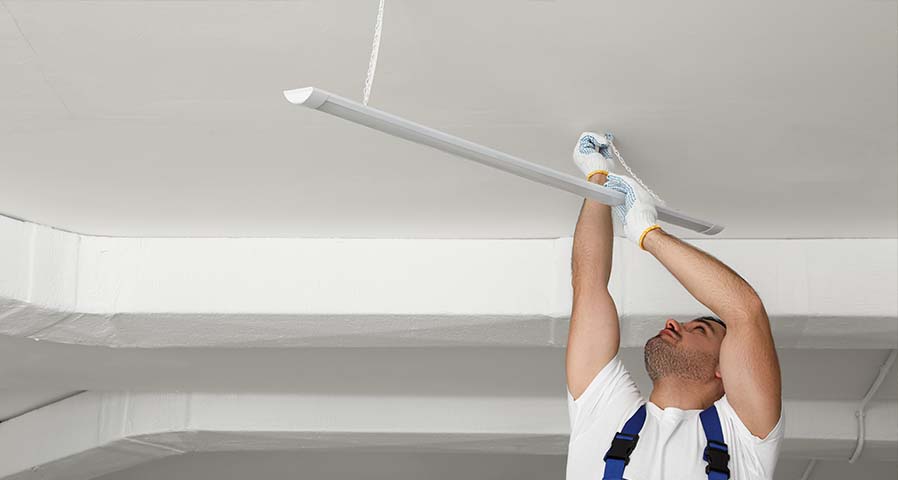
Outsourcing lighting upgrades and maintenance needs improves tenant retention and boosts ROI for property managers.
Color temperature can be adjusted through AI powered lighting control technology. Doing so helps customize the…
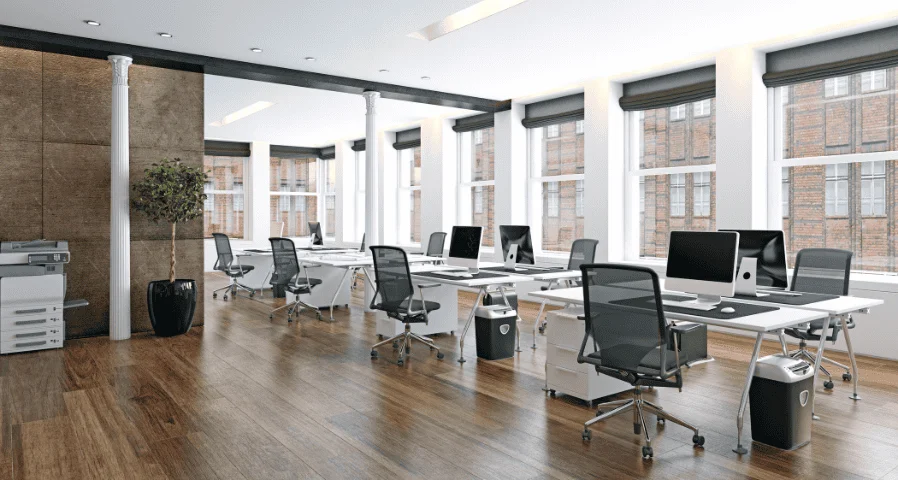
Studies have shown that natural lighting has proven to improve workplaces by helping employees be more…
Outsourcing lighting upgrades and maintenance needs improves tenant retention and boosts ROI for property managers.
Color temperature can be adjusted through AI powered lighting control technology. Doing so helps customize the space to your industry…
Studies have shown that natural lighting has proven to improve workplaces by helping employees be more comfortable and efficient. As…